Created in partnership with the Helpdesk on Business & Human Rights

Conflict-Affected and High-Risk Areas (CAHRAs)
Managing Human Rights Risks in Conflict-Affected Settings
Conflict-Affected and High-Risk Areas (CAHRAs) are regions experiencing armed conflict, widespread violence, political instability, weak governance, or serious human rights abuses. Businesses have a responsibility to identify, prevent and mitigate adverse human rights impacts associated with their activities in CAHRAs, while also understanding and addressing how their activities may affect conflict dynamics.
Summary & Mandate
The IssueBusinesses operating in, sourcing from, investing in, or maintaining business relationships linked to CAHRAs face heightened risks of being connected to severe human rights harms, including forced labour, displacement, violence, arbitrary detention, and violations of international humanitarian law, while their activities and business relationships may also influence or exacerbate conflict dynamics.
The Business MandateRespect human rights and avoid contributing to conflict-related harms by implementing conflict-sensitive, heightened human rights due diligence (hHRDD) in line with the UN Guiding Principles on Business and Human Rights (UNGPs), guidance from OECD and UNDP, and emerging due diligence legislation.
Impact & Scale
2 Billion People
People living in fragile or conflict-affected contexts
Across the world’s six permanently inhabited continents, 6% of territory is impacted by armed fighting as of 2026 (Verisk Maplecroft).
676 Million
Women live within 50 km of a deadly conflict event
War severely impacts women through mass displacement and high rates of conflict-related sexual violence.
473 Million
Children impacted globally
1 in 6 children live in areas affected by armed conflict. (PRIO, 2024)
Policy Commitment
Companies should have a publicly available policy commitment approved at the highest level that explicitly recognises the heightened risks associated with Conflict-Affected and High-Risk Areas and outlines what steps the company is taking to avoid contributing to conflict-related harms.
View Policy GuidanceDue Diligence
Conduct heightened human rights due diligence seeking to understand root causes, triggers and key actors. Address the increased risk of severe human rights abuses, ensuring mitigation measures remain conflict-sensitive, proportionate to identified risks, and adaptable to rapidly changing conflict conditions.
See Due Diligence ConsiderationsBest Practice Goal
Identify conflict-related risks early and determine when heightened human rights due diligence is required. Actively consult a wide range of potentially affected individuals or credible proxies and experts, while paying special attention to distinct vulnerabilities (such as those based on gender, ethnicity, marginalisation or displacement).
Explore Recommended Actions
Explore the Full Issue
Dive deeper into the risks, case studies and sector-specific guidance.
Jump to Page SectionsWhat are Conflict-Affected and High-Risk Areas (CAHRAs)?
Conflict-Affected and High-Risk Areas (CAHRAs) are locations affected by armed conflict, widespread violence, political instability, weak governance, insecurity or serious human rights abuses. While active armed conflict is an important indicator, severe human rights risks can also arise in contexts characterised by repression, criminal violence, institutional weakness, displacement and post-conflict recovery. As a result, a location does not need to be experiencing war to present CAHRA-level risks.
Guidance from the OECD, UN Global Compact, UNDP and the UN Working Group on Business and Human Rights increasingly encourages companies to focus on the severity of risks to people and the dynamics driving conflict, rather than relying solely on official conflict designations. Conflict-affected contexts can include active conflict, fragile and unstable environments, and post-conflict or transitional justice settings.
Because conflict settings present an increased risk of gross human rights abuses, the UN Guiding Principles on Business and Human Rights (UNGPs) call on States to take additional measures to support responsible business conduct in these contexts. The UNGPs also expect companies to understand and address their impacts on conflict by undertaking conflict-specific human rights due diligence (sometimes referred to as heightened human rights due diligence, or hHRDD), and to respect International Humanitarian Law (IHL) alongside internationally recognised human rights.
The business context in conflict-affected settings
Conflict-affected settings present unique challenges for businesses due to the heightened risk of violence, instability, human rights abuses, displacement, weak governance, and violations of international humanitarian law. In these environments, companies may face increased risks through their operations, supply chains, investments, security arrangements and business relationships. The consequences of business decisions can also be more severe, creating the potential for companies to become connected to conflict-related harms, either directly or indirectly.
As recognised by the UN Working Group on Business and Human Rights, business activities in conflict-affected settings cannot be neutral. Even where companies seek to remain impartial, their operations, business relationships and decisions may influence conflict dynamics and affect stakeholders. While businesses cannot be neutral actors in conflict-affected areas, they should still strive to maintain impartiality, including through consistently demonstrating independence from government-led or armed group-led efforts and by avoiding activities or public statements that may be interpreted as supporting a party to the conflict or excusing its rights abuses.
Defining CAHRAs in practice
There is no single global list of CAHRAs. Different frameworks use slightly different definitions and methodologies, and the status of a location can change rapidly as conflict dynamics evolve. Companies should therefore adopt a risk-based approach, considering factors such as conflict intensity, governance conditions, human rights performance, insecurity and vulnerability to future escalation.
See the Due Diligence Considerations section for guidance on identifying and assessing CAHRAs.
What is the Dilemma?
Around 2 billion people now live in fragile or conflict-affected contexts. In CAHRAs the risk of severe human rights harm is elevated across operations, supply chains and investment activities. Proactive, conflict-sensitive and ‘heightened’ human rights due diligence is essential to protect people from harm, and business from serious consequences.
Key Trends
- Growing number and geographic spread of conflict-affected areas: The prevalence of armed conflicts has reached historic highs in recent years, while CAHRAs are increasingly affecting regions beyond traditional conflict zones, including areas experiencing political instability, weak governance and widespread insecurity. Analysis by Verisk Maplecroft suggests that 6.1% of territory across the world’s six permanently inhabited continents is impacted by armed fighting in 2026, up from 2.6% five years ago.
- Increasing regulatory and investor scrutiny: Human rights and responsible business conduct frameworks increasingly recognise conflict-affected settings as presenting heightened risks. As a result of this, governments are increasingly making conflict-sensitivity and heightened human rights due diligence mandatory prerequisites for companies operating in CAHRAs, tying them directly to commercial licenses and permits. Investors (e.g. NBIM), lenders and regulators are placing greater emphasis on conflict-sensitive business conduct and heightened human rights due diligence.
- Expanding exposure through global supply chains: As supply chains become more complex and globalised, companies face greater exposure to conflict-related risks. This has increased expectations around supply chain mapping, traceability and visibility beyond Tier 1 suppliers.
- Convergence of conflict, climate and migration risks: Climate change, resource scarcity, displacement and geopolitical tensions are increasingly interacting with conflict dynamics, creating new challenges for businesses operating in high-risk environments and value chains.
- Rising legal, financial and reputational consequences: Companies linked to human rights abuses, sanctions violations or conflict-related harms face growing scrutiny from governments, investors, civil society organisations and the media.
- Shift towards conflict-sensitive approaches: Guidance from organisations such as the UNDP, DCAF and the DCAF-ICRC Partnership, TrustWorks and others increasingly emphasises that companies should assess not only how conflict affects their business, but also how their own operations, investments and business relationships may influence conflict dynamics.
Negative Impacts on Human Rights from Business Activities in CAHRAs
Business activities in conflict-affected settings have the potential to impact a range of human rights [1] including but not limited to:
- Right to life, liberty and security of person (UDHR, Article 3; ICCPR, Articles 6 and 9): Conflict settings are associated with heightened risks of violence, arbitrary detention, enforced disappearance, torture and unlawful killings. Business activities, products, services or security arrangements may contribute to or be linked to these harms.
- Freedom from forced labour and child labour (UDHR, Article 4; ICCPR, Article 8; ILO Conventions 29, 105, 138 and 182): Conflict, displacement and economic instability can increase vulnerability to forced labour, trafficking, the worst forms of child labour and other forms of exploitation within operations and supply chains.
- Freedom of expression, association and peaceful assembly (UDHR, Articles 19 and 20; ICCPR, Articles 19, 21 and 22): Civic freedoms are often restricted in conflict-affected settings. Workers, communities, trade unions, journalists and human rights defenders may face intimidation, reprisals or violence when raising concerns about business activities.
- Freedom of movement and protection from forced displacement (UDHR, Article 13; ICCPR, Article 12): Business activities may contribute to, benefit from, or be linked to displacement, loss of land, restrictions on movement or other impacts affecting conflict-affected populations.
Vulnerable Groups
The impacts of conflict are not evenly distributed. Certain groups may face heightened risks of violence, exploitation, displacement, discrimination and barriers to accessing remedy. Companies should apply a vulnerability lens as part of heightened human rights due diligence (hHRDD), recognising that conflict can amplify existing inequalities and create new risks for affected populations. Particular attention should be paid to:
- Children and young people: Children may face heightened risks of violence, recruitment into armed groups, child labour, trafficking, family separation and disruption to education and healthcare.
- Women and girls: Conflict often increases exposure to gender-based violence, sexual exploitation, economic marginalisation and unequal access to resources and services.
- Displaced populations, including refugees and internally displaced persons (IDPs): Displacement can increase vulnerability to exploitation, trafficking, forced labour, inadequate living conditions and exclusion from essential services.
- Migrant workers: Language barriers, insecure legal status, debt, recruitment-related risks and restricted mobility can make migrant workers particularly vulnerable during conflict and crisis situations.
- Indigenous Peoples, minorities and local communities: These groups may face heightened risks of discrimination, displacement, loss of land and livelihoods, restrictions on cultural rights, and limited access to decision-making processes.
- Human rights defenders, journalists and trade union representatives: Individuals raising concerns about human rights, labour rights, environmental impacts or conflict-related harms may face intimidation, reprisals, arbitrary detention, enforced disappearance or violence. Companies should take particular care to identify and prevent retaliation linked to their operations, supply chains or business relationships.
- Intersectionality: Individuals may face multiple and overlapping vulnerabilities in conflict-affected settings. For example, a woman who is also a migrant worker, refugee or member of an Indigenous community may face compounded risks and barriers to accessing protection, services and remedy. Companies should consider how different identities and circumstances interact when assessing and addressing human rights risks.
Women and children in conflict-affected settings
Women and children continue to bear a disproportionate share of the human costs of conflict. In 2024, an estimated 676 million women lived within 50 km of a deadly conflict event (the highest number recorded since the 1990s) while conflict-related sexual violence had grown by 87% compared with 2022. Children are also heavily affected, with approximately 473 million children worldwide, or one in six, live in areas affected by armed conflict. Many face heightened risks of recruitment by armed groups, trafficking, child labour and disrupted access to education and healthcare. More than 105,000 children were verified as having been recruited and used by parties to conflict between 2005 and 2022, although the true figure is believed to be significantly higher. Conflict can also increase the prevalence of child marriage and other forms of exploitation.
Impacts on Business
Businesses can be impacted by conflict and conflict-related human rights abuses in their operations, supply chains and business relationships in multiple ways:
- Legal and criminal risk: Companies operating in conflict-affected settings face heightened risks of litigation, regulatory enforcement, sanctions violations and non-compliance with emerging human rights due diligence requirements. Consistent with Principle 2 of the UN Global Compact, businesses should ensure they are not complicit in human rights abuses. Companies may face allegations of contributing to, enabling or benefiting from conflict-related harms, including serious human rights abuses, war crimes and other violations of international law. High-profile cases, such as the Lafarge Syria litigation, have further reinforced expectations that companies assess and address these risks through robust heightened human rights due diligence.
- Operational risk: Conflict can disrupt business operations through insecurity, damage to infrastructure, community unrest, labour shortages, restrictions on movement, border closures and supply chain interruptions. These disruptions may affect production, sourcing, transportation and access to markets.
- Reputational and stakeholder risk: Companies operating in conflict-affected settings are often subject to increased scrutiny from civil society organisations, investors, affected communities, governments and the media. Alleged links to conflict, corruption, exploitation or human rights abuses can result in significant reputational damage and loss of social licence to operate.
- Financial and investment risk: Investors and financial institutions increasingly expect companies to identify and manage conflict-related risks. Failure to do so may result in divestment, exclusion from investment portfolios, increased costs of capital and reduced access to finance.
Sustainable Development Goals (SDGs)
- Goal 1 (“End poverty in all its forms everywhere”)
- Goal 2 (“End hunger, achieve food security and improved nutrition and promote sustainable agriculture”)
- Goal 3 (“Ensure healthy lives and promote well-being for all at all ages”)
- Goal 4 (“Ensure inclusive and equitable quality education and promote lifelong learning opportunities for all”)
- Goal 5 (“Achieve gender equality and empower all women and girls”)
- Goal 6 (“Ensure availability and sustainable management of water and sanitation for all”)
- Goal 8 (“Promote sustained, inclusive and sustainable economic growth, full and productive employment and decent work for all”)
- Goal 9 (“Build resilient infrastructure, promote inclusive and sustainable industrialization and foster innovation”)
- Goal 16 (“Promote peaceful and inclusive societies for sustainable development, provide access to justice for all and build effective, accountable and inclusive institutions at all levels”)
Key Resources
- Geneva Centre for Security Sector Governance (DCAF) & International Committee of the Red Cross (ICRC), Addressing Security and Human Rights Challenges in Complex Environments Toolkit, (latest edition): A practical toolkit for companies operating in conflict-affected and other high-risk environments.
- Geneva Centre for Security Sector Governance (DCAF) and ICRC Toolkit, (latest edition): A collection of guidance, tools and publications explaining how businesses should apply international humanitarian law (IHL) and responsible business conduct in armed conflict.
- Organisation for Economic Co-operation and Development (OECD), Due Diligence Guidance for Responsible Supply Chains of Minerals from Conflict-Affected and High-Risk Areas, (2016): The leading international framework for identifying, preventing and mitigating risks associated with sourcing minerals from CAHRAs, widely referenced in both regulation and voluntary standards.
- Office of the United Nations High Commissioner for Human Rights (OHCHR), Business and Human Rights in Challenging Contexts: Considerations for Remaining and Exiting, (2023): Guidance on applying the UNGPs in situations involving conflict, political instability and severe human rights risks, with particular focus on responsible remain/exit decisions, leverage and access to remedy.
- TrustWorks Global, Conflict-Sensitive Business Practice and Human Rights Resources, (latest edition): Practical guidance on conflict sensitivity, stakeholder engagement and responsible business conduct in fragile and conflict-affected settings, helping companies understand how their activities interact with conflict dynamics and peacebuilding efforts.
- UN Global Compact & Principles for Responsible Investment (PRI), Guidance on Responsible Business in Conflict-Affected and High-Risk Areas: A Resource for Companies and Investors, (2010): Foundational guidance for companies and investors on implementing responsible business conduct, conflict-sensitive approaches and enhanced due diligence in CAHRAs.
- United Nations Development Programme (UNDP) & UN Working Group on Business and Human Rights, Heightened Human Rights Due Diligence for Business in Conflict-Affected Contexts: A Guide, (2022): The leading practical guidance on implementing heightened human rights due diligence (hHRDD) in conflict-affected settings.
- Voluntary Principles Initiative, Conflict Analysis Tool for Companies, (2022): Practical tool for companies operating in conflict-affected contexts that supports them in their efforts to implement the Voluntary Principles on Security and Human Rights.
- Voluntary Principles Initiative, IGT Companion Tool –Operationalizing the Voluntary Principles Through the Lens of Protecting and Respecting the Unique Needs and Rights of Women and Other Disadvantaged Groups, (2023): Practical tool to support companies operationalise the Voluntary Principles on Security and Human Rights by focusing on the rights of women and other disadvantaged groups.
Definition & Legal Instruments
Legal Instruments, Standards and Guidance
Understanding CAHRAs and heightened risks
There is no single internationally agreed definition of a conflict-affected and high-risk area (CAHRA). However, the OECD Due Diligence Guidance for Responsible Supply Chains of Minerals from Conflict-Affected and High-Risk Areas provides one of the most widely recognised and influential definitions in practice. It identifies CAHRAs by reference to the presence of armed conflict, widespread violence, political instability or repression, institutional weakness, insecurity, collapse of civil infrastructure, or other risks of harm to people.
International standards and guidance, including the OECD Guidance and the UNGPs, recognise that businesses operating in, sourcing from, investing in, or maintaining business relationships connected to these settings face heightened human rights risks. Under UNGP 13, businesses are expected to avoid causing or contributing to adverse human rights impacts through their own activities and to seek to prevent or mitigate impacts that are directly linked to their operations, products or services through business relationships, even where they have not contributed to those impacts. UNGP 19 further clarifies that the appropriate response will depend on whether a company has caused, contributed to, or is directly linked to an adverse impact. These distinctions are particularly important in CAHRAs, where severe human rights abuses are more likely to occur and where business decisions can have conflict-related consequences.
How different frameworks apply
The legal and normative framework for business conduct in CAHRAs is made up of different types of instruments. Some international legal frameworks, such as international human rights law and international humanitarian law, are primarily addressed to States and, in some cases, parties to armed conflict. Others, such as the UNGPs and OECD Guidance, are soft-law frameworks that define internationally recognised expectations for responsible business conduct. In addition, a growing body of regional and national legislation now imposes binding due diligence, reporting, sanctions, import control or supply chain obligations directly on companies.
This distinction matters for businesses. The UNGPs establish the corporate responsibility to respect human rights as a globally recognised standard of expected conduct for all businesses. While they do not create directly enforceable international legal obligations for companies, they provide an authoritative framework for responsible business conduct, with States retaining the primary duty to protect human rights. The responsibility to respect applies throughout a company’s operations and business relationships, including in situations of armed conflict, political instability and widespread violence.
UNGP 7, directed at States, specifically recognises that conflict-affected areas present a heightened risk of business involvement in gross human rights abuses, and calls on States to take additional measures to support responsible business conduct. These measures include engaging with companies at an early stage to identify and mitigate risks, supporting the assessment of heightened human rights impacts, paying particular attention to risks such as gender-based and sexual violence, withholding public support from companies implicated in gross human rights abuses that fail to address them, and ensuring that national laws and enforcement mechanisms effectively respond to serious human rights harms. Although GP 7 focuses on State action, company expectations arise from the broader corporate responsibility to respect human rights under the UNGPs.
International Standards and Frameworks
These instruments primarily establish obligations for States, and in some cases parties to armed conflict, or are intended as global standards of responsible business conduct. Most do not create directly enforceable human rights obligations on companies under international law. However, they shape the standards that businesses are expected to respect, particularly where companies operate in conflict-affected settings or may be connected to severe harms.
UN Guiding Principles on Business and Human Rights (UNGPs)
The UNGPs set the global standard regarding the responsibility of businesses to respect human rights in their operations and across their value chains, calling on States to consider national and international, mandatory and voluntary measures to foster business respect for human rights. Businesses should consider the UNGPs in their operational and supply chain decisions, and when following national legislation.
UNGP 7 specifically recognises the heightened risk of gross human rights abuses in conflict-affected areas and provides the foundation for conflict-sensitive human rights due diligence, sometimes known as heightened human rights due diligence (hHRDD). Conflict-sensitive due diligence is an operational refinement of the UNGPs’ general human rights due diligence concept for conflict settings, primarily developed in subsequent guidance (e.g. UNDP hHRDD Guide, 2022), rather than a distinct legal standard in itself.
Geneva Convention and International Humanitarian Law
The Geneva Conventions of 1949 and their Additional Protocols form the core of modern International Humanitarian Law (IHL), establishing rules to protect civilians and other persons affected by armed conflict. These obligations are further reinforced by the Montreux Document on Private Military and Security Companies, which reaffirms the international legal responsibilities of States in relation to the activities of private military and security companies (PMSCs) and offers practical guidance to support their effective oversight and regulation.
While the primary legal obligations fall on States and parties to conflict, businesses operating in conflict zones increasingly face expectations to understand and respect IHL principles. This expectation is reflected in Principle 12 of the UNGPs which recognises that, in situations of armed conflict, enterprises should take into account relevant standards of international humanitarian law in addition to internationally recognised human rights. Guidance from the International Committee of the Red Cross (ICRC) increasingly highlights the relevance of IHL to private sector operations in conflict-affected settings. Although companies are not generally parties to armed conflict under IHL, they may face legal exposure through domestic criminal laws, sanctions regimes and complicity claims where their activities or business relationships are linked to violations of IHL.
UN Declaration on the Right to Peace
The UN Declaration on the Right to Peace was adopted by the UN General Assembly in 2016 and recognises that everyone has the right to enjoy peace such that all human rights can be promoted and protected. Although not legally binding, the expectation isthat States, businesses and other actors avoid actions that contribute to conflict, violence and instability. The Declaration provides an important recognised framework for responsible business conduct in conflict-affected and post-conflict settings.
Binding legislation
Companies operating in, sourcing from, or maintaining business relationships connected to conflict-affected and high-risk areas (CAHRAs) are increasingly subject to legal and regulatory expectations relating to human rights due diligence. While few laws focus exclusively on conflict settings, many emerging human rights and environmental due diligence frameworks recognise that conflict-affected contexts present heightened risks and require enhanced due diligence measures. Minerals due diligence regimes based on the OECD CAHRA framework are among the few notable exceptions.
Human rights due diligence laws
At the regional level, the EU Corporate Sustainability Due Diligence Directive (CSDDD) establishes mandatory human rights and environmental due diligence obligations for large EU companies and certain non-EU companies operating in the EU market.[2] The Directive recognises that conflict-affected and high-risk areas (CAHRAs) may present heightened risks of severe adverse impacts, requiring companies to adopt a risk-based approach and, where appropriate, apply enhanced due diligence measures that take account of relevant international humanitarian law principles. Compliance is supported through administrative supervision and enforcement by national authorities, alongside limited civil liability provisions in certain circumstances.
Similar obligations may also arise under national due diligence legislation, including the French Duty of Vigilance Law, German Supply Chain Due Diligence Act (LkSG) and Norwegian Transparency Act. While these frameworks share the objective of strengthening corporate management of human rights risks, they differ significantly in scope, enforcement and legal consequences, ranging from civil liability and regulatory fines to transparency and reporting requirements. For example, the French Duty of Vigilance Law requires certain companies to establish and implement a vigilance plan and provides for civil liability in defined circumstances; the German LkSG is enforced primarily through administrative supervision and fines; and the Norwegian Transparency Act focuses principally on transparency, due diligence and public reporting obligations. Companies should therefore consider the specific requirements of each applicable legal framework rather than treating them as a uniform due diligence regime.
Reporting and transparency requirements
Alongside due diligence requirements, companies increasingly face risk-based transparency and disclosure obligations. For example, the EU Corporate Sustainability Reporting Directive (CSRD) requires in-scope companies to report on material sustainability matters in accordance with the European Sustainability Reporting Standards (ESRS), including their governance, policies, due diligence processes, risks, impacts and actions relating to human rights. In the context of conflict-affected and high-risk areas (CAHRAs), this may include reporting on material conflict-related human rights risks, the company’s heightened human rights due diligence (hHRDD) processes, identified impacts on affected stakeholders, and measures taken to prevent, mitigate and remediate adverse impacts.
By contrast, the Sustainable Finance Disclosure Regulation (SFDR) applies to financial market participants and financial advisers, requiring them to disclose how sustainability risks are integrated into investment decisions and, where applicable, report on principal adverse impacts (PAIs) of investment decisions on sustainability factors. Investments that are linked to conflict-related human rights risks, such as forced labour, severe human rights abuses or business relationships connected to conflict-affected areas, may therefore be relevant to SFDR disclosures where they constitute material sustainability risks or principal adverse impacts.
A growing number of Modern Slavery Acts, including those in the United Kingdom, Australia and Canada, also require organisations to report on how they identify and address risks of forced labour and other severe human rights abuses within their operations and supply chains.
While these frameworks have significantly increased corporate transparency and accountability, they are generally focused on disclosure and reporting rather than imposing comprehensive, enforceable human rights due diligence obligations equivalent to those found in legislation such as the EU CSDDD or the German Supply Chain Due Diligence Act (LkSG). Conflict-affected settings represent areas of heightened risk under both disclosure and due diligence frameworks.
Product, commodity and supply chain regulations
Several regulations impose enhanced due diligence, traceability, disclosure or import-control requirements in relation to commodities, geographies and human rights risks commonly associated with conflict-affected settings. Examples include the EU Conflict Minerals Regulation, EU Battery Regulation, EU Deforestation-free Product Regulation and Swiss Ordinance on Due Diligence and Transparency, which require certain companies to identify, assess and address risks in their supply chains. Disclosure requirements also apply under regimes such as Section 1502 of the US Dodd-Frank Act, while import-control measures including the EU Forced Labour Regulation and US Uyghur Forced Labor Prevention Act (UFLPA) restrict market access for products linked to forced labour.
Although their requirements differ, these measures collectively strengthen corporate accountability for risks associated with conflict-affected and high-risk areas (CAHRAs), including conflict financing, forced labour and other severe human rights abuses.
Consequences of non-compliance
Non-compliance can result in significant financial, legal and commercial consequences. Under the EU CSDDD, companies may face fines of up to 3% of net worldwide turnover and potential civil liability (both to be decided by Member State), while the German LkSG allows fines of up to 2% of annual global turnover and exclusion from public procurement. The EU Forced Labour Regulation (compliance required from December 2027) and UFLPA can result in products being withdrawn, blocked or excluded from key markets where forced labour concerns are identified. The EU CSRD may lead to financial penalties and other enforcement measures for non-compliant sustainability reporting, to be decided by the Member State. Other due diligence, reporting and responsible sourcing regimes may result in regulatory investigations, corrective actions, disclosure obligations and significant reputational damage.
Sanctions regimes and trade restrictions
UN Security Council sanctions regimes
United Nations Security Council sanctions are legally binding measures adopted under Chapter VII of the UN Charter, including Article 41, which authorises measures not involving the use of armed force to address threats to international peace and security. All UN Member States are required to implement them through domestic laws and regulations, meaning companies may be subject to compliance obligations. In practice, sanctions regimes have increasingly evolved from broad trade restrictions towards targeted or “smart” sanctions aimed at influencing the behaviour of specific actors while minimising humanitarian impacts. These measures may include arms embargoes, travel bans, trade restrictions, asset freezes and prohibitions on dealing with entities, sectors or goods.
Businesses operating in or connected to CAHRAs should assess whether their operations, business relationships, products or supply chains may be exposed to applicable UN, regional or national sanctions measures. Particular attention may be required where sanctions target armed groups, conflict financing, security actors, high-risk commodities or specific geographic areas.
Regional and national sanctions and trade controls
In addition to UN sanctions, companies may be subject to sanctions and trade restrictions imposed by regional and national authorities, including the European Union, United Kingdom and United States. These measures may include asset freezes, financial restrictions, import and export controls, arms embargoes and prohibitions on dealings with designated persons, entities, sectors or territories.
Failure to identify and manage sanctions-related risks can expose companies to significant legal, financial, operational and reputational consequences. Sanctions compliance should therefore form part of broader conflict-sensitive and heightened human rights due diligence processes, alongside assessments of actual and potential human rights and conflict-related impacts.
Voluntary frameworks and practical guidance
The following frameworks provide the foundation for responsible business conduct in conflict-affected and high-risk areas (CAHRAs) and are frequently referenced by governments, regulators, investors and civil society organisations:
OECD Due Diligence Guidance for Responsible Supply Chains of Minerals from Conflict-Affected and High-Risk Areas
The OECD Due Diligence Guidance for Responsible Supply Chains of Minerals from Conflict‑Affected and High‑Risk Areas (2016) is the leading international framework for identifying and managing conflict-related risks in mineral supply chains. Although developed for the minerals sector, its risk-based due diligence approach has influenced broader expectations around conflict-sensitive due diligence across sectors. While the Guidance itself is voluntary, it has been incorporated into and explicitly referenced by, several binding legal and regulatory frameworks – including the EU Conflict Minerals Regulation. As a result, the Guidance has played an important role in shaping international standards and emerging mandatory due diligence requirements for business.
UNDP & UN Working Group on Business and Human Rights, Heightened Human Rights Due Diligence for Business in Conflict-Affected Contexts
The UNDP Guide on Heightened Human Rights Due Diligence for Business in Conflict-Affected Contexts (2022) provides the leading practical framework for implementing hHRDD in conflict affected contexts. Building on the UNGPs, it provides detailed guidance on conflict sensitivity, stakeholder engagement, vulnerable groups, the assessment of whether impacts are caused, contributed to or directly linked to a company’s activities, responsible disengagement, and access to remedy. While non-binding, it is increasingly used by companies, practitioners and stakeholders to interpret good practice in conflict-affected and high-risk areas.
Voluntary Principles on Security and Human Rights (VPSHR)
The Voluntary Principles on Security and Human Rights are a multi-stakeholder initiative that provides guidance for companies on maintaining the safety and security of their operations while respecting human rights. The Principles are particularly relevant for companies with significant interactions with public or private security providers, including those operating in the extractives, energy and infrastructure sectors. Although not legally binding, the VPSHR have been widely adopted by companies and are frequently incorporated into corporate security policies, procedures and risk management frameworks to help prevent, mitigate and address security-related human rights abuses.
Litigation and Complicity Risks
Companies operating in conflict-affected settings face growing scrutiny over whether their activities, payments, business relationships or security arrangements have contributed to conflict-related harms or serious human rights abuses.
Recent notable cases:
- Chiquita Brands (Colombia): The company has faced extensive litigation and regulatory scrutiny relating to payments made to armed groups during Colombia’s armed conflict, highlighting the risks associated with operating in highly complex security environments.
- Lafarge (France): The long-running Syria litigation involved allegations that the company made payments to armed groups, including ISIS, in order to maintain operations during the Syrian conflict. The case has become a milestone for corporate complicity risks in conflict settings and the importance of heightened human rights due diligence.
These cases demonstrate the significant legal, financial and reputational consequences that may arise where companies are alleged to have financed, enabled or otherwise contributed to conflict-related abuses. They also reinforce the importance of conflict-sensitive decision-making and robust heightened human rights due diligence.
While litigation often highlights examples of corporate failure, a growing body of guidance and good practice demonstrates how companies can identify, prevent and mitigate conflict-related risks through effective heightened human rights due diligence and conflict-sensitive business practices. See Good Practice in Action.
Contextual Risk Factors
Several contextual factors can increase the likelihood that business activities will be linked to conflict-related harms and severe human rights impacts:
- Active or recent armed conflict and insecurity: Areas affected by armed conflict, widespread violence or insecurity often present heightened risks of serious human rights abuses, including violence against civilians, displacement, destruction of infrastructure and breakdowns in access to essential services.
- Weak governance and rule of law: Limited government capacity, corruption, ineffective institutions and weak enforcement can increase the risk of business involvement in human rights abuses and reduce access to remedy for affected stakeholders.
- Poorly regulated security forces: Weak oversight of public security forces raises the risk of excessive force and human rights abuses while non-state armed groups drive instability and tension.
- Systemic human rights abuses: Contexts characterised by repression, restrictions on civic freedoms, discrimination, arbitrary detention or widespread human rights violations for workers and communities. Such patterns may also signal underlying grievances and governance failures that contribute to escalating conflict and instability.
- Conflict-linked natural resources and war economies: The extraction, trade or transportation of natural resources can, in some contexts, finance armed groups, fuel corruption or contribute to conflict dynamics. Companies in resource-intensive sectors may therefore face heightened risks of being linked to conflict-related harms.
- Social, ethnic, religious or political tensions: Long-standing grievances, exclusion, inequality and identity-based tensions can increase the risk of violence and instability. Business activities may inadvertently exacerbate these dynamics.
- Displacement and humanitarian crises: Large-scale population displacement, food insecurity and breakdowns in public services can increase vulnerability to exploitation, trafficking, forced labour and other human rights abuses within business operations and supply chains.
- Limited supply chain visibility: Conflict-related risks are often concentrated deeper within supply chains, particularly where subcontracting and informal labour are prevalent. Limited visibility beyond Tier 1 suppliers can make emerging human rights risks difficult to identify and address.
Industry-specific Risk Factors
The sectors below represent industries most commonly associated with elevated human rights risks in conflict-affected and high-risk areas. The list is illustrative rather than exhaustive. Depending on the nature of a company’s operations and value chain, similar considerations may also apply to sectors such as apparel and textiles, oil and gas, telecommunications and other industries operating in or sourcing from conflict-affected settings.
Agriculture
Conflict is a major driver of food insecurity and can disrupt agricultural production, processing and distribution. Agricultural operations often take place in rural and remote areas where governance may be weak and communities highly dependent on land and natural resources.
Sector-specific risk factors include:
- Land disputes, forced displacement and loss of livelihoods.
- Threats, violence and intimidation against workers and local communities.
- Increased risk of forced labour, child labour and labour exploitation.
- Competition over land, water and other natural resources, particularly where climate stress and conflict intersect.
Key Resources
- Food and Agriculture Organization (FAO), Supporting Responsible Investments in Agriculture and Food Systems (RAI): FAO portal providing information on responsible investment in agriculture and food systems with links to reports, videos and e-learning courses.
- OECD‑FAO, Guidance for Responsible Agricultural Supply Chains, (2016): International framework for identifying, preventing and mitigating risks associated with agricultural supply chains, including a model enterprise policy and guidance for engaging with Indigenous peoples.
- OECD‑FAO, Business Handbook on Deforestation and Due Diligence in Agricultural Supply Chains, (2023): A practical handbook for companies on integrating deforestation and forest degradation risks into their corporate due diligence procedures, based on the OECD-FAO Guidance (2016).
- Organisation for Economic Co-operation and Development (OECD), Due Diligence Checker for the Agricultural Sector: A self-assessment questionnaire that enables companies to evaluate the effectiveness of their due diligence processes, identify areas of compliance and highlight any gaps requiring further action.
Construction, Energy and Infrastructure
Infrastructure, energy and construction projects are often located in conflict-affected regions, involve significant land use, and may require interaction with security forces or government authorities. These characteristics can increase the risk that projects contribute to or become linked with conflict dynamics, particularly where governance is weak and stakeholder engagement is inadequate.
Sector-specific risk factors include:
- Land acquisition, displacement and impacts on local communities.
- Reliance on public or private security providers to protect personnel and assets, creating heightened risks relating to the use of force, interactions with communities and other human rights abuses where security arrangements are not consistent with the Voluntary Principles on Security and Human Rights.
- Reduced government oversight and weaker enforcement of labour, environmental and safety standards during conflict.
- Heightened risks of corruption, extortion and diversion of project revenues.
- Increased risk of exacerbating existing social, ethnic, political or resource-related tensions if projects are not informed by robust conflict analysis and stakeholder engagement.
- Complex contractor and subcontractor networks, creating heightened risks relating to labour rights, working conditions and supply chain oversight.
Key Resources
- International Finance Corporation (IFC), Performance Standards on Environmental and Social Sustainability, (2012): Part of IFC’s Sustainability Framework, the Performance Standards define the responsibilities of the IFC’s clients on how they should manage the environmental and social risks associated with their projects.
- Voluntary Principles Initiative: The Principles are the leading global standard on security and human rights, helping companies understand conflict dynamics, identify security-related human rights risks, and implement measures to prevent and mitigate adverse impacts. The Principles are also embedded within a range of international industry standards and performance frameworks.
- Office of the United Nations High Commissioner for Human Rights (OHCHR), Guiding Principles on Business and Human Rights (UNGPs), (2011): The internationally recognised framework that sets out the responsibilities of states and businesses to prevent, address and remedy adverse human rights impacts linked to business activities.
- United Nations Development Programme (UNDP) & UN Working Group on Business and Human Rights, Heightened Human Rights Due Diligence for Business in Conflict-Affected Contexts: A Guide, (2022): The leading practical guidance on implementing heightened human rights due diligence (hHRDD) in conflict-affected settings.
Defence, Security and Private Security Services
Companies operating in the defence and security sector, as well as businesses that engage public or private security providers to protect personnel, assets or operations, may face heightened risks of contributing to conflict-related harms or adverse impacts on people, including violations of international humanitarian law.
Private security providers frequently operate alongside extractive industries, infrastructure projects, logistics providers and other businesses in conflict-affected settings, where security personnel may interact directly with workers, local communities and public authorities. At the same time, defence contractors and companies supplying dual-use goods and technologies face heightened risks that their products or services may be misused by state or non-state actors.
Robust oversight, accountability and conflict-sensitive human rights due diligence are therefore particularly important to ensure compliance with international human rights standards, international humanitarian law and responsible security practices.
Sector-specific risk factors include:
- Potential misuse of products, services or technologies by state or non-state actors, including in ways that contribute to conflict-related harms or violations of international humanitarian law.
- Excessive or unlawful use of force, detention and civilian protection concerns arising from security operations.
- Intimidation, harassment or reprisals against workers, human rights defenders or local communities.
- Weak oversight of contracted security providers, subcontractors and security arrangements, including inadequate training on human rights and international humanitarian law.
- Relationships with state security forces or non-state armed actors that may contribute to conflict-related harms or increase the risk of complicity in human rights abuses.
- Lack of effective grievance, accountability and oversight mechanisms for security-related incidents.
- Increased scrutiny regarding compliance with international humanitarian law, international human rights standards and responsible security practices, resulting in elevated legal, reputational and liability risks.
Key Resources
- Geneva Centre for Security Sector Governance (DCAF) & International Committee of the Red Cross (ICRC), Addressing Security and Human Rights Challenges in Complex Environments Toolkit, (latest edition): A practical toolkit for companies operating in conflict-affected and other high-risk environments.
- International Code of Conduct Association (ICOCA), International Code of Conduct for Private Security Service Providers (ICoC), (2021): The Code is global standard established to ensure private security companies respect human rights and humanitarian law in complex environments. Its implementation is overseen by ICOCA, a tripartite multi-stakeholder association made up of governments, private security firms, and civil society organisations.
- Voluntary Principles Initiative: The Principles are the leading global standard on security and human rights, helping companies understand conflict dynamics, identify security-related human rights risks, and implement measures to prevent and mitigate adverse impacts. The Principles are also embedded within a range of international industry standards and performance frameworks.
- Voluntary Principles Initiative, Conflict Analysis Tool for Companies, (2022): Practical tool for companies operating in conflict-affected contexts that supports them in their efforts to implement the Voluntary Principles on Security and Human Rights.
- Voluntary Principles Initiative, IGT Companion Tool – Operationalizing the Voluntary Principles Through the Lens of Protecting and Respecting the Unique Needs and Rights of Women and Other Disadvantaged Groups: Practical tool to support companies operationalize the Voluntary Principles on Security and Human Rights by focusing on the rights of women and other disadvantaged groups.
Financial Services
Financial institutions may be exposed to conflict-related risks through lending, investment, insurance and client relationships. In conflict-affected settings, risks may include financing activities linked to armed groups, conflict-related human rights abuses, corruption or sanctions violations. Investors and lenders are increasingly expected to assess these risks through heightened human rights due diligence and responsible stewardship.
Sector-specific risk factors include:
- Financing activities linked to armed groups, sanctions breaches or human rights abuses.
- Difficulties assessing beneficial ownership and business relationships in weak governance contexts.
- Heightened expectations regarding risk-based due diligence and responsible investment practices.
- Increased exposure to sanctions, anti-money laundering and financial crime risks.
Key Resources
- Investor Alliance for Human Rights: A global investor platform that provides tools, guidance and collaborative engagement opportunities to help institutional investors integrate human rights considerations into investment decision-making and stewardship practices.
- Organisation for Economic Co-operation and Development (OECD), Guidelines for Multinational Enterprises on Responsible Business Conduct, (2023): The leading international standard on responsible business conduct, providing recommendations for companies on human rights, labour rights, environmental management, business integrity, supply chain due diligence and other sustainability-related risks.
- Organisation for Economic Co-operation and Development (OECD), Responsible Business Conduct for Institutional Investors, (2017): Guidance for institutional investors on applying OECD due diligence recommendations to identify, prevent and address adverse impacts on human rights, labour rights, the environment and governance within investment portfolios.
- Organisation for Economic Co-operation and Development (OECD), Responsible Business Conduct Due Diligence for Project and Asset Finance Transactions: Practical guidance for banks and financial institutions on integrating responsible business conduct and human rights due diligence into project and asset finance transactions, helping identify, mitigate and manage environmental, social and governance risks associated with financed activities.
- United Nations Environment Programme (UNEP) Financial Initiative, Human Rights Guidance Tools for Financial Institutions: Practical toolkit designed to help financial institutions align their policies, due diligence processes, stakeholder engagement, and remedy mechanisms with the UN Guiding Principles on Business and Human Rights (UNGPs), including sector-specific guidance for lending and investment activities.
Logistics and Transport
Conflict can significantly disrupt the movement of goods, people and essential supplies, requiring transport operators to navigate insecure environments and rapidly changing conflict dynamics. Disruptions in 2026 linked to insecurity in the Red Sea and the temporary closure of the Strait of Hormuz, demonstrated how conflict can quickly affect global shipping routes and supply chains. Companies operating in this sector are increasingly expected to assess both operational and human rights risks associated with transport activities in conflict-affected settings.
Sector-specific risk factors include:
- Disruption to trade routes, ports and transport corridors.
- Extortion, theft, illegal taxation and interference by armed groups.
- Increased risks to workers, contractors and transport operators.
- Restrictions arising from sanctions, border closures or military activity.
- Limited visibility of subcontractors operating in high-risk environments.
Key Resources
- Organisation for Economic Co-operation and Development (OECD), Guidelines for Multinational Enterprises on Responsible Business Conduct, (2023): The leading international standard on responsible business conduct, providing recommendations for companies on human rights, labour rights, environmental management, business integrity, supply chain due diligence and other sustainability-related risks.
- Organisation for Economic Co-operation and Development (OECD), Due Diligence Guidance for Responsible Supply Chains of Minerals from Conflict-Affected and High-Risk Areas, (2016): The leading international framework for identifying, preventing and mitigating risks associated with sourcing minerals from CAHRAs, widely referenced in both regulation and voluntary standards.
- United Nations Development Programme (UNDP) & UN Working Group on Business and Human Rights, Heightened Human Rights Due Diligence for Business in Conflict-Affected Contexts: A Guide, (2022): The leading practical guidance on implementing heightened human rights due diligence (hHRDD) in conflict-affected settings.
Metals and Minerals
Mining and mineral supply chains have, in some conflict-affected regions, been linked to serious human rights abuses and the financing of armed groups. The OECD Due Diligence Guidance was developed to help companies identify and address these risks and avoid contributing to conflict through their sourcing practices.
Sector-specific risk factors include:
- Financing of armed groups through mineral extraction or trade.
- Violent conflict related to control of valuable resources.
- Security-related human rights abuses.
- Impacts on Indigenous Peoples, local communities and artisanal miners.
- Local tensions and community conflict related to the impact of company operations which may escalate over time into sustained social unrest.
- Increased scrutiny under conflict minerals and responsible sourcing regulations.
Key Resources
- International Council on Mining and Metals (ICMM), Human Rights Due Diligence Guidance, (2024): Guidance and toolkit for mining and metals companies on implementing human rights due diligence in line with the UN Guiding Principles on Business and Human Rights, including assessing impacts, managing risks, tracking actions, and engaging stakeholders.
- Organisation for Economic Co-operation and Development (OECD), Guidelines for Multinational Enterprises on Responsible Business Conduct, (2023): The leading international standard on responsible business conduct, providing recommendations for companies on human rights, labour rights, environmental management, business integrity, supply chain due diligence and other sustainability-related risks.
- Organisation for Economic Co-operation and Development (OECD), Due Diligence Guidance for Responsible Supply Chains of Minerals from Conflict-Affected and High-Risk Areas, (2016): The leading international framework for identifying, preventing and mitigating risks associated with sourcing minerals from CAHRAs, widely referenced in both regulation and voluntary standards.
- Organisation for Economic Co-operation and Development (OECD), Handbook on Environmental Due Diligence in Mineral Supply Chains, (2023): Practical guide for companies on integrating environmental considerations into mineral supply chain due diligence, providing recommendations for identifying, assessing, mitigating and addressing environmental risks and impacts in line with OECD responsible business conduct standards.
- Organisation for Economic Co-operation and Development (OECD), Due Diligence Checker for the Minerals Sector: An interactive self-assessment tool that helps companies evaluate their alignment with the OECD Minerals Due Diligence Guidance, identify gaps in existing due diligence systems, and strengthen responsible sourcing practices across the mineral value chain.
- London Bullion Market Association (LBMA), ASM Toolkit, (latest edition): Practical toolkit developed by the London Bullion Market Association (LBMA) to support responsible engagement with artisanal and small-scale mining (ASM), helping companies assess risks, strengthen due diligence processes, and promote responsible and inclusive sourcing practices.
- Responsible Minerals Initiative (RMI), Conflict Minerals Reporting Template (CMRT),(latest edition): Standardised reporting template used by companies to collect and share information on the sourcing, country of origin, and smelters or refiners of conflict minerals, supporting supply chain transparency and responsible sourcing due diligence.
- United Nations Development Programme (UNDP) & UN Working Group on Business and Human Rights, Heightened Human Rights Due Diligence for Business in Conflict-Affected Contexts: A Guide, (2022): The leading practical guidance on implementing heightened human rights due diligence (hHRDD) in conflict-affected settings.
Technology
Digital technologies can play an important role in both protecting and undermining human rights in conflict-affected settings.
Sector-specific risk factors include:
- Surveillance, censorship and misuse of digital technologies (such as social media) by conflict actors, including targeting of vulnerable communities.
- Risks associated with handling personal data and sensitive information.
- Disruption to communications infrastructure and essential services.
- Human rights impacts linked to AI, cyber technologies and digital products deployed in conflict settings.
Key Resources
- BSR & Just Peace Labs, Conflict-Sensitive Human Rights Due Diligence for ICT Companies, (2022): Toolkit for ICT companies on identifying and addressing conflict-related human rights risks through conflict-sensitive and heightened human rights due diligence.
- Organisation for Economic Co-operation and Development (OECD), Due Diligence Guidance for Responsible AI, (2026): Guidance for companies on implementing responsible AI practices by integrating risk-based due diligence and responsible business conduct across the AI value chain.
- Office of the United Nations High Commissioner for Human Rights (OHCHR), B-Tech Project: Guidance and resources for applying the UN Guiding Principles on Business and Human Rights to the development, deployment and governance of digital technologies.
- Office of the United Nations High Commissioner for Human Rights (OHCHR), Guiding Principles on Business and Human Rights (UNGPs), (2011): The internationally recognised framework that sets out the responsibilities of states and businesses to prevent, address and remedy adverse human rights impacts linked to business activities.
- United Nations Development Programme (UNDP) & UN Working Group on Business and Human Rights, Heightened Human Rights Due Diligence for Business in Conflict-Affected Contexts: A Guide, (2022): The leading practical guidance on implementing heightened human rights due diligence (hHRDD) in conflict-affected settings.
Due Diligence Considerations
This section outlines practical steps that companies can take to identify, prevent and address adverse human rights impacts associated with sourcing from, operating or investing in, conflict-affected and high-risk areas (CAHRAs). The approach is aligned with the UNGPs and guidance on conflict-sensitive human rights due diligence (sometimes referred to as heightened human rights due diligence, or hHRDD).
Conflict-sensitive due diligence builds on standard human rights due diligence by considering not only how conflict may increase risks to people, but also how a company’s operations, business relationships and decisions may influence conflict dynamics. It should be integrated into broader human rights and environmental due diligence processes and inform decisions relating to sourcing, investment, operations, security arrangements and business relationships in conflict-affected settings.
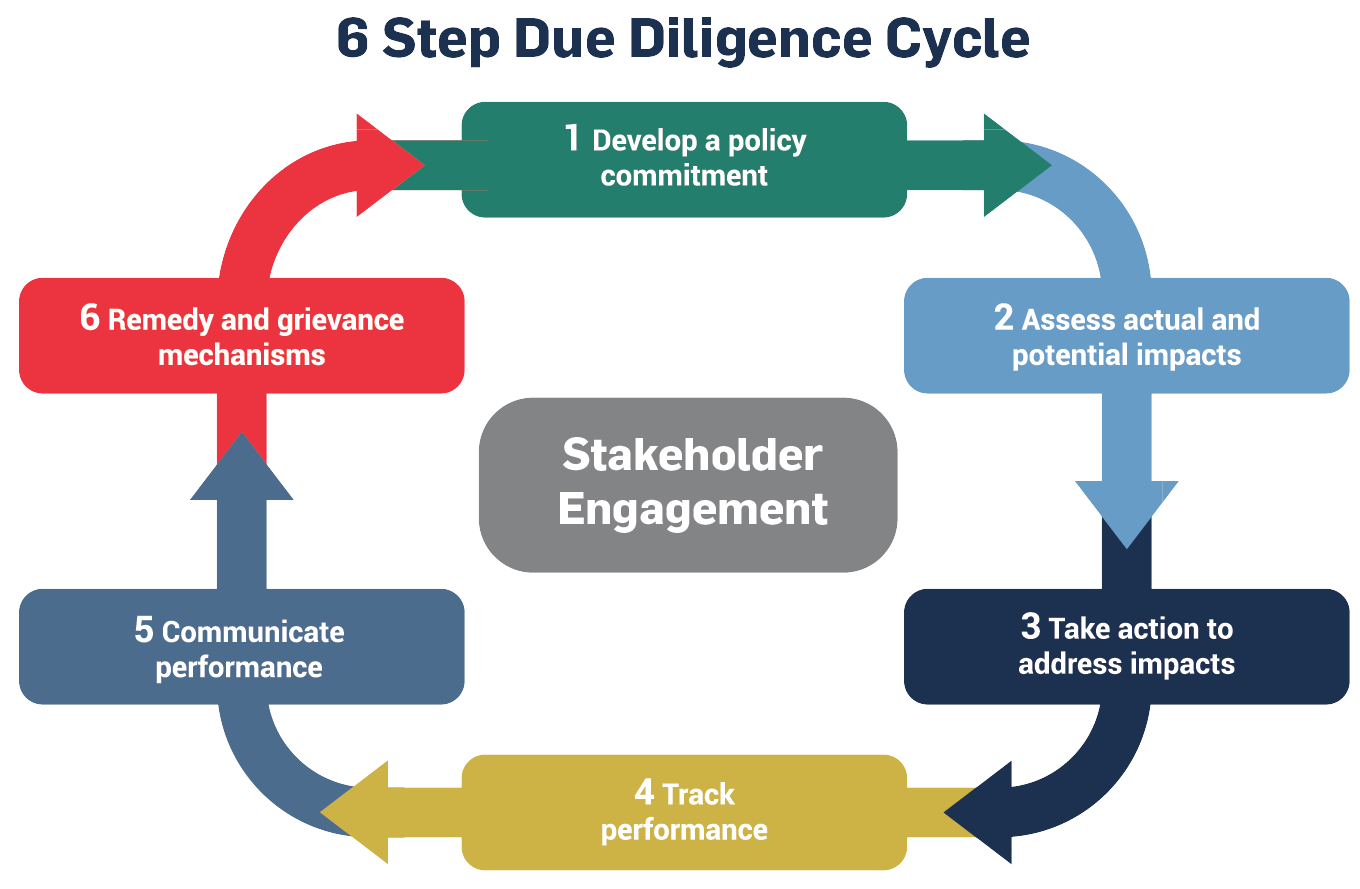
When to conduct conflict-sensitive HRDD?
Companies should conduct conflict-sensitive human rights due diligence (sometimes referred to as heightened human rights due diligence, or hHRDD) whenever they operate in, source from, invest in, or maintain business relationships connected to conflict-affected and high-risk areas (CAHRAs). This includes situations of armed conflict, widespread violence, severe political instability, post-conflict recovery and other contexts where there is a heightened risk of gross human rights abuses. Companies should focus not only on whether a conflict formally exists, but also on whether conflict dynamics create elevated risks for people and communities or increase the likelihood that business activities may contribute to, exacerbate or become connected to harm.
Because conflict contexts can evolve rapidly, companies should regularly reassess risks and adapt their due diligence and business decisions as conditions change.
Conflict-sensitive human rights due diligence
This page uses the term ‘conflict-sensitive human rights due diligence’ to describe the enhanced due diligence expected in conflict-affected and high-risk settings. The UNDP and the UN Working Group on Business and Human Rights use the term heightened human rights due diligence (hHRDD) to describe a similar concept. While terminology varies, the common objective is to ensure that companies understand both how conflict may heighten risks to people and how their activities, relationships and decisions may influence conflict dynamics.
In practice, this typically requires integrating conflict analysis, paying greater attention to vulnerable groups, ongoing monitoring, engaging stakeholders in a conflict-sensitive manner, exercising leverage to prevent or mitigate harm, and informing responsible decisions on whether to remain, adapt, suspend or disengage from operations or business relationships.
1. Develop a Policy Commitment to prevent/address adverse human rights impacts in conflict-affected settings
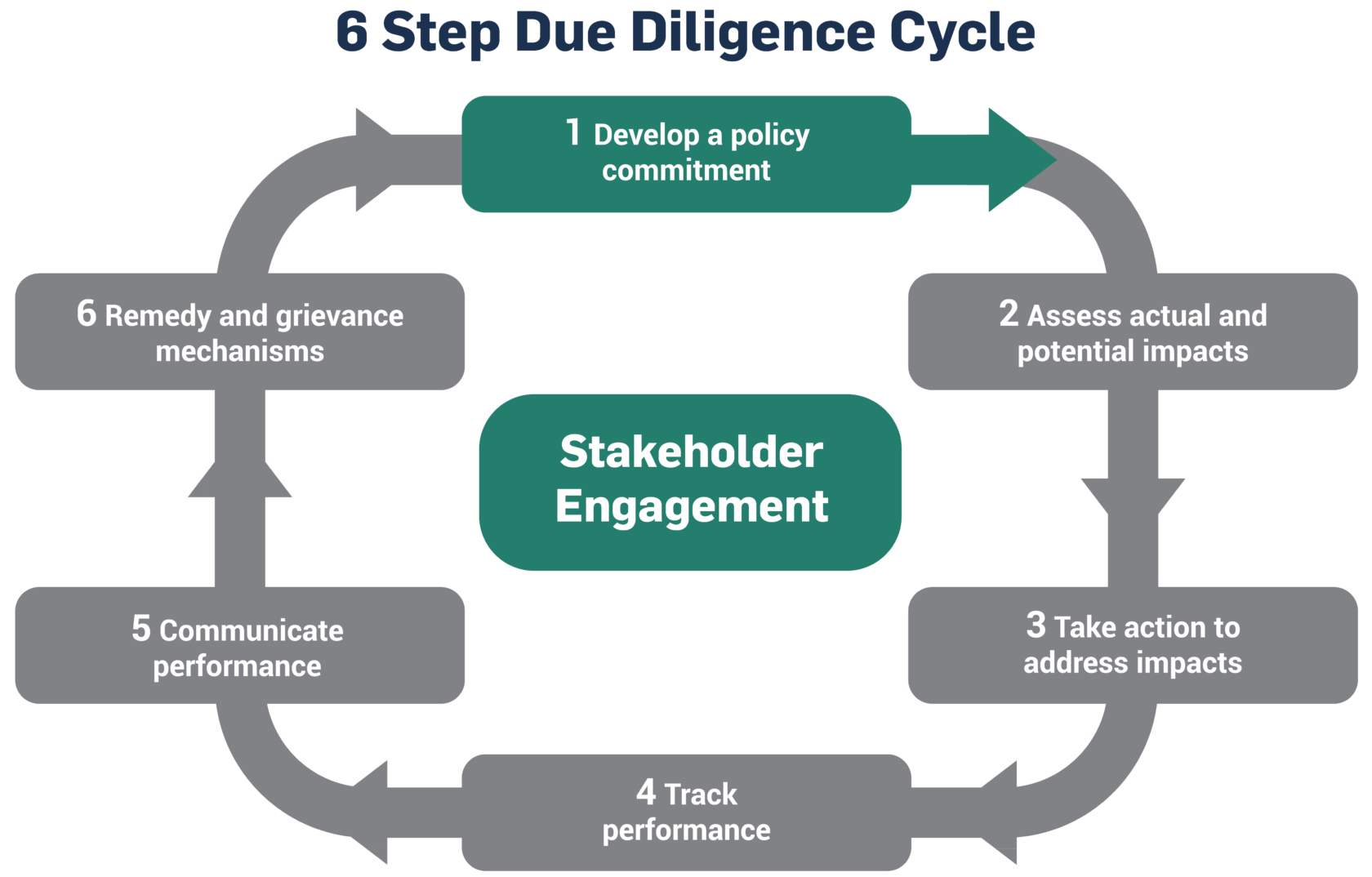
Companies operating in, sourcing from or maintaining business relationships connected to conflict-affected and high-risk areas (CAHRAs) should ensure their policy commitments explicitly recognise the heightened risks associated with these contexts.
Policies should reaffirm the company’s commitment to respect human rights, avoid contributing to conflict-related harms and apply conflict-sensitive human rights due diligence in conflict-affected settings.
When developing or reviewing policy commitments, companies should consider questions such as:
- Does the policy explicitly recognise the heightened human rights risks associated with operating in or sourcing from CAHRAs?
- Does it commit the company to applying conflict-sensitive and heightened human rights due diligence, including conflict analysis where appropriate?
- Does it set out expectations for business partners, including suppliers and security providers?
- Does it provide clear guidance on when heightened due diligence, escalation or disengagement should be considered?
- Does it recognise the need to identify and protect individuals and groups facing heightened vulnerabilities in conflict-affected settings?
Policy commitments should be accompanied by clear governance arrangements, including board and senior management oversight, escalation procedures and defined responsibilities for conflict-related decision-making. Companies should ensure that conflict analysis and human rights considerations are integrated into procurement, sourcing, security and operational decisions and reviewed as conflict dynamics evolve.
In practice, this may involve establishing clear escalation procedures when new conflict-related risks emerge, assigning responsibility for decisions on continued operations or sourcing, and ensuring that procurement, security and commercial teams are trained to identify and respond to conflict-related human rights risks. Companies should also identify indicators that trigger enhanced review.
Red flags may include a rapid deterioration in the security situation, a surge in military or defence investment, credible reports of serious human rights abuses or violations of international humanitarian law, significant changes in territorial control, allegations that business partners are linked to armed groups or abusive security forces, or increasing requests for informal payments or other indicators of corruption.
Because conflict situations can change rapidly, the presence of one or more red flags should trigger renewed conflict analysis, enhanced human rights due diligence and consideration of additional mitigation measures, including the exercise of leverage or, where appropriate, responsible adaptation or disengagement, rather than automatically requiring withdrawal. See UNDP guidance (2022) for more information.
Helpful Resources
- United Nations Development Programme (UNDP) & UN Working Group on Business and Human Rights, Heightened Human Rights Due Diligence for Business in Conflict-Affected Contexts: A Guide, (2022): The leading practical guidance on implementing heightened human rights due diligence (hHRDD) in conflict-affected settings.
2. Assess Actual and Potential Impacts
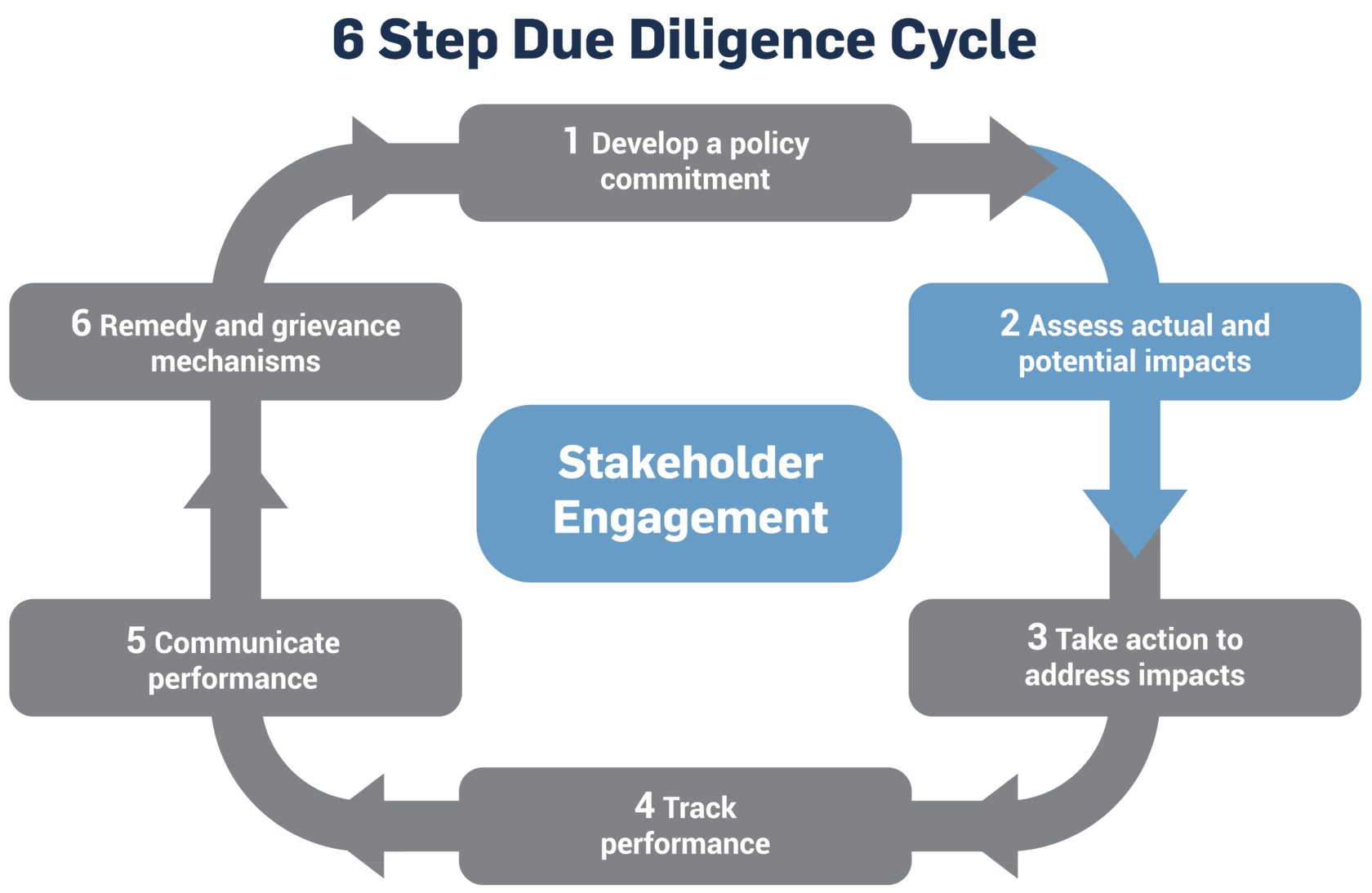
Unlike standard human rights due diligence, heightened human rights due diligence (hHRDD) requires companies to adopt enhanced and conflict-sensitive measures that reflect the heightened likelihood of severe human rights abuses in CAHRAs.
Key elements of hHRDD include:
- Conflict analysis: Understand the conflict context, including conflict drivers, key actors, patterns of violence, governance challenges and risks to vulnerable groups. Consider both how conflict may heighten human rights risks to affected stakeholders and whether activities, investments, sourcing practices, security arrangements or business relationships could contribute to conflict dynamics or exacerbate existing tensions. Assessments should be ongoing, recognising that risks can change rapidly as conflict dynamics evolve. The UNDP Guide (2022) highlights conflict analysis as a distinct component of hHRDD. Conflict analysis should precede and inform human rights impact assessment. Understanding conflict dynamics allows companies to identify how business activities may influence conflict itself, rather than assessing human rights risks in isolation. This distinction is important because conflict-related harms can be systemic, long-lasting and difficult to remedy once they occur.
- Vulnerability lens: Companies should also apply a vulnerability lens throughout the assessment process. Conflict frequently exacerbates existing inequalities and creates new patterns of vulnerability. Consideration should be given to groups that may face heightened risks, such as women and girls, children, Indigenous Peoples, displaced persons, persons with disabilities, minority groups, human rights defenders and workers in precarious forms of employment. Assessments should consider how conflict may affect different groups in different ways and adapt mitigation measures accordingly.
- Impact assessment: Identify actual and potential adverse human rights impacts arising from operations, products, services and business relationships, recognising that conflict may rapidly increase both the likelihood and severity of harm.
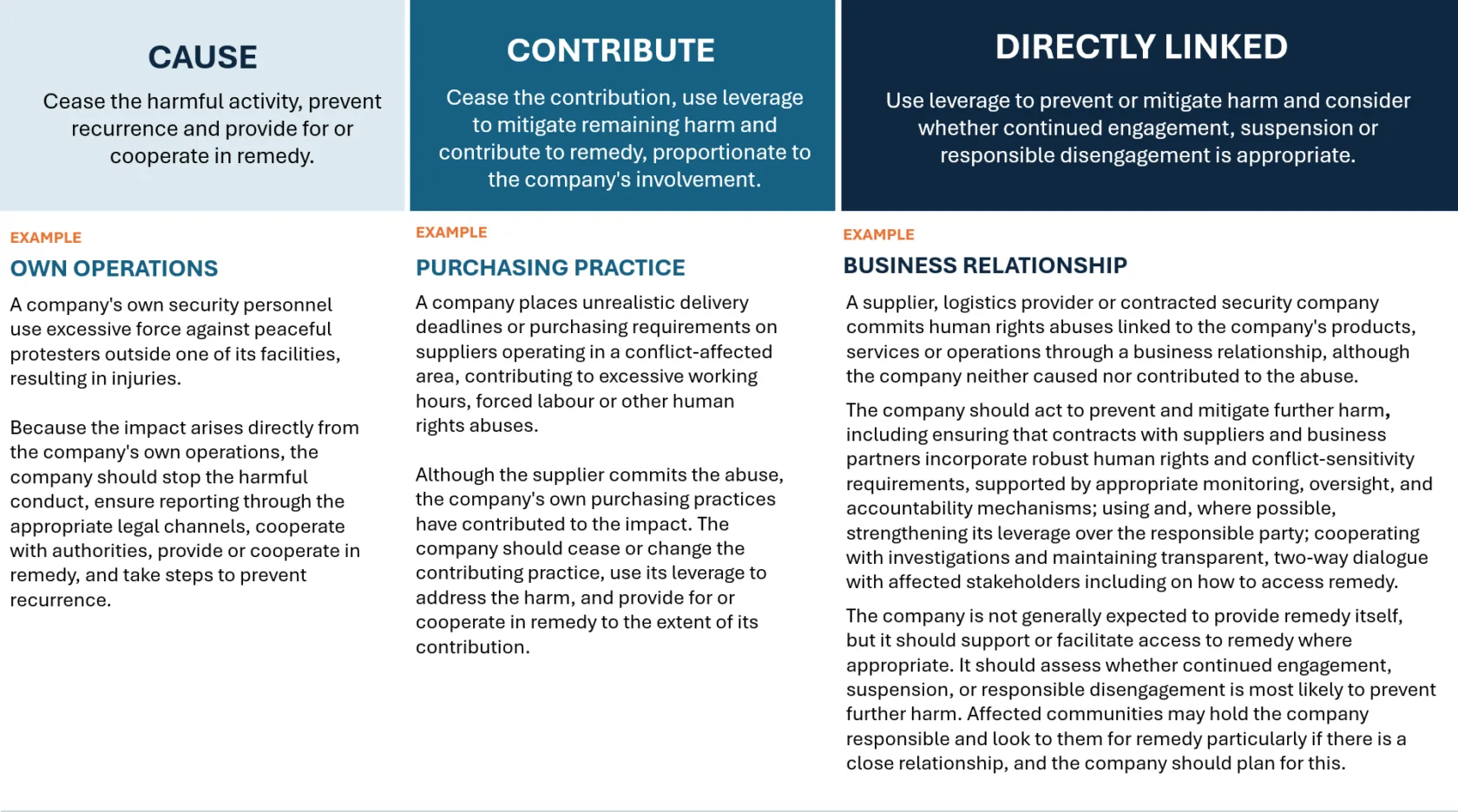
- Cause, contribute, directly linked: Assess the company’s relationship to identified impacts. Under the UNGPs, the appropriate response depends on whether the company has caused, contributed to, or is directly linked to an impact through its operations or business relationships. This should inform decisions on how to prevent, mitigate and address harm, including the exercise of leverage, responsible disengagement and, where appropriate, the provision of remedy.
- Leverage: Where impacts are linked through business relationships, companies should use and, where possible, increase their leverage to prevent or mitigate harm. In conflict-affected settings, exercising leverage is often a continuous process rather than a one-off intervention. This may involve engaging suppliers, customers, contractors, investors, security providers, governments or other business partners to influence behaviour, strengthen respect for human rights and reduce conflict-related risks and encourage responsible business conduct.
- Ongoing monitoring: Conflict situations can change rapidly. Companies should continuously reassess impacts, leverage and mitigation measures rather than treating hHRDD as a one-off exercise or as part of a periodic review. Particular attention should be paid during periods of escalation, political transition, ceasefires and post-conflict reconstruction.
- Post-conflict settings: hHRDD may remain necessary in post-conflict and transitional justice contexts, where unresolved grievances, displacement and barriers to remedy often persist. Companies should assess whether their activities may affect ongoing peacebuilding, accountability or reparations processes and seek to avoid undermining long-term recovery and reconciliation efforts. The UN Working Group on Business and Human Rights has highlighted the importance of applying the UNGPs in post-conflict and transitional justice contexts, including through effective remedy and conflict-sensitive decision-making.
Stakeholder Engagement
Conflict-sensitive stakeholder engagement: Engagement should be conflict-sensitive, inclusive and designed to avoid causing harm. Depending on the context, this may include affected communities, workers, civil society organisations, humanitarian actors, public authorities, security actors and, where appropriate and lawful, other conflict actors. Unlike in lower-risk contexts, stakeholder engagement in CAHRAs may require companies to engage with a broader range of actors, adapt engagement methods to avoid exposing participants to retaliation or other security risks, and recognise that representative structures may change as conflict evolves. Such engagement should always be guided by applicable laws, conflict sensitivity and the company’s responsibility to respect human rights.
The company’s relationship to an impact determines the expected response:
Identifying CAHRAs
Companies should not rely solely on country designations or sanctions lists to identify CAHRAs. Instead, they should adopt a risk-based approach that considers factors such as conflict intensity, insecurity, weak governance, systemic human rights abuses, displacement, organised violence and other indicators of fragility. A country does not need to be experiencing active armed conflict to present CAHRA-level risks. Spillover effects such as refugee flows, regional instability and post-conflict transitions can also create heightened human rights risks.
Companies should also assess whether a location meets the threshold of an armed conflict under International Humanitarian Law (IHL), as this may trigger additional legal and operational considerations. They should then assess conflict dynamics at the subnational level, recognising that risks may be concentrated in specific regions rather than across an entire country. Relevant considerations include the intensity of violence, the presence and activities of armed groups, patterns of insecurity, territorial control, displacement, and whether conflict actors are subject to sanctions or other restrictions.
Helpful Resources
- BSR, Business in Conflict-Affected and High-Risk Contexts, (2021): This report provides guidance on what companies should do differently to identify and address their impacts on human rights in conflict-affected and high-risk areas (heightened human rights due diligence).
- International Committee of the Red Cross, Frequently Asked Questions: International Armed Conflict (IAC), (2025): This FAQ explains what international armed conflicts are, how they are identified under international humanitarian law, when and how the Geneva Conventions apply and what obligations parties to a conflict have.
- TrustWorks Global, Conflict-Sensitive Business Practice and Human Rights Resources: Practical guidance on conflict sensitivity, stakeholder engagement and responsible business conduct in fragile and conflict-affected settings, helping companies understand how their activities interact with conflict dynamics and peacebuilding efforts.
- United Nations Development Programme (UNDP) & UN Working Group on Business and Human Rights, Heightened Human Rights Due Diligence for Business in Conflict-Affected Contexts: A Guide, (2022): The leading practical guidance on implementing heightened human rights due diligence (hHRDD) in conflict-affected settings.
3. Integrate and Take Action to Address Impacts
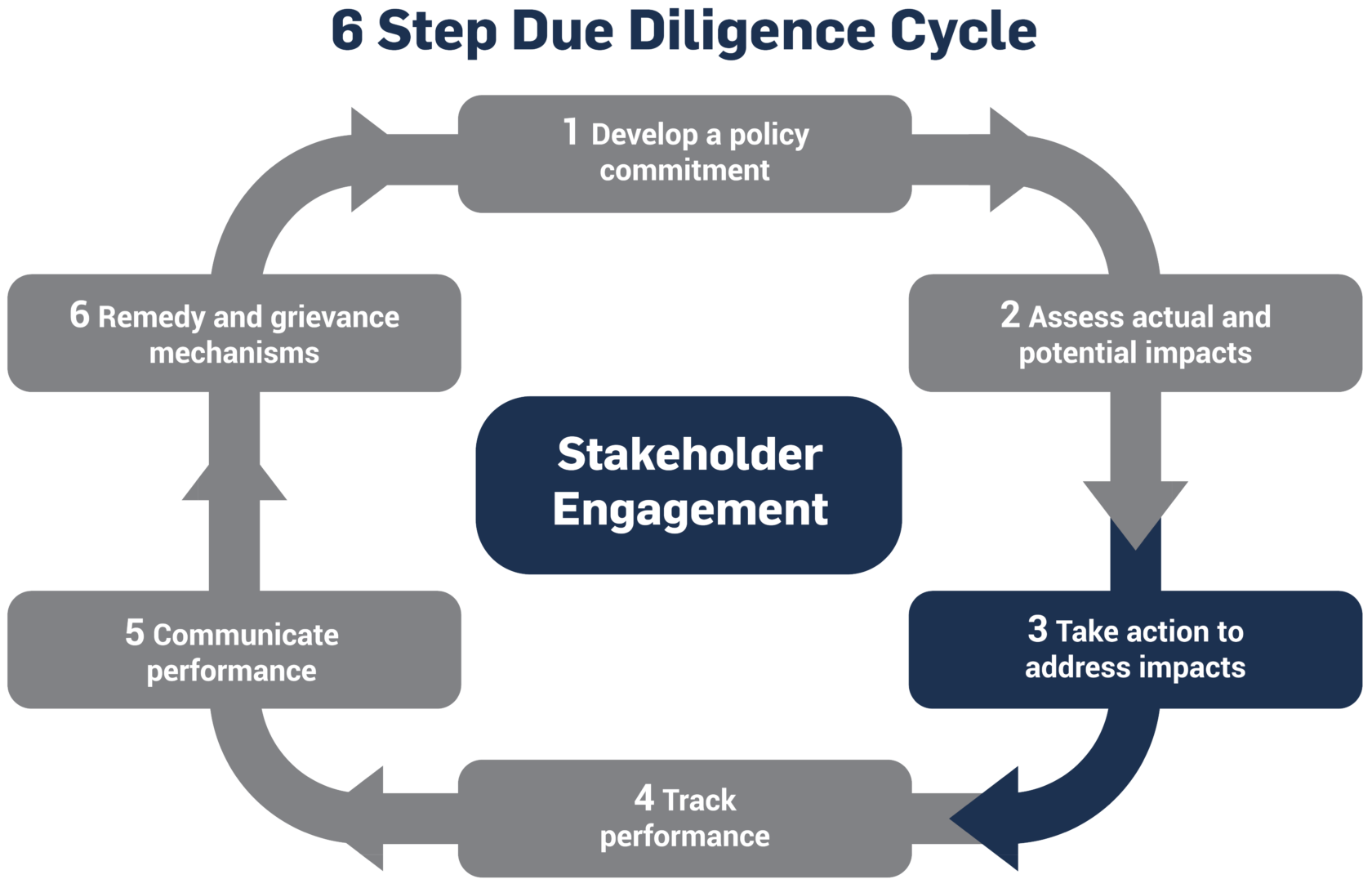
Following the assessment of actual and potential impacts, companies should integrate findings into relevant business functions and take appropriate action to prevent, mitigate and address adverse human rights impacts. Unlike standard human rights due diligence (HRDD), heightened human rights due diligence (hHRDD) requires companies to ensure that mitigation measures remain conflict-sensitive, proportionate to the severity of risks identified, and responsive to rapidly changing conflict dynamics.
In conflict-affected settings, responses should be proportionate to the severity of the risks identified and informed by an understanding of local conflict dynamics. Companies should prioritise the most severe risks to people, recognising that risks can escalate rapidly as conflicts evolve.
Conflict-Sensitive Action and Mitigation
- Companies should ensure that actions taken to address human rights risks do not inadvertently exacerbate conflict or create new harms. In line with the UNDP guidance (2022), businesses should consider how their operations, sourcing practices, commercial relationships, security arrangements and investments may influence conflict dynamics and take steps to strengthen positive impacts where possible.
Some actions companies can take include:
- Integrating conflict-related risks into business decision-making, procurement, sourcing and investment processes.
- Using leverage with suppliers, contractors, customers, security providers and other business partners to prevent or mitigate adverse impacts.
- Adapting commercial, sourcing and purchasing practices where these contribute to heightened human rights risks.
- Strengthening protections for vulnerable groups, workers and affected communities.
- Ensuring security arrangements are aligned with human rights and the Voluntary Principles on Security and Human Rights.
- Regularly reviewing and adapting mitigation measures as conflict dynamics, stakeholder perspectives and operating conditions evolve.
- Coordinating across relevant business functions to ensure that human rights, security, procurement, legal and commercial decisions are aligned and informed by hHRDD findings.
Responsible Exit
After conducting heightened human rights due diligence, a company may determine that it should not enter, continue or expand operations in a conflict-affected and high-risk area (CAHRA), or that disengagement from a business relationship is necessary. Unlike standard HRDD, hHRDD requires companies to recognise that both remaining and exiting may create or exacerbate adverse human rights impacts. Decisions to remain, adapt, suspend or responsibly disengage should therefore be informed by ongoing conflict analysis, meaningful stakeholder engagement and an assessment of the foreseeable consequences for affected people. Remaining and exiting can have significant human rights implications. The UNGPs, OHCHR and UNDP guidance emphasise that companies should carefully assess the likely impacts of disengagement and seek to avoid creating or exacerbating harm through their exit. A responsible exit should be planned, implemented and monitored with affected stakeholders in mind.
Some actions companies can take include:
- Planning for potential disengagement early and assessing the likely human rights consequences of different exit scenarios.
- Considering whether withdrawal could worsen conditions for workers, communities or other affected stakeholders, or contribute to instability and conflict dynamics.
- Providing reasonable notice and engaging affected stakeholders where possible to understand and mitigate adverse impacts.
- Taking steps to reduce foreseeable harms to workers and communities, particularly where operations provide important livelihoods, services or infrastructure.
- Where assets or operations are transferred, assessing the human rights record and capabilities of potential buyers or successors and using leverage to promote responsible conduct.
- Monitoring the human rights impacts of adaptation or disengagement, where feasible and appropriate, to understand whether additional mitigation or remedy may be required.
Applying Conflict-Sensitive HRDD in Practice
Strawberry (formerly Nordic Choice Hotels): Integrating Conflict-Sensitive Procurement
Following procurement challenges associated with the war in Ukraine, Strawberry developed a practical Conflict-Affected and High-Risk Area (CAHRA) screening checklist in collaboration with other companies in the food and hospitality sectors. Drawing on the UNDP’s guidance on heightened human rights due diligence (hHRDD), the checklist is designed as an early-warning tool to help procurement teams identify potential conflict-related risks and determine when enhanced due diligence may be required. The initiative demonstrates how conflict-sensitive due diligence can be embedded into routine procurement processes and is increasingly being promoted as an example of emerging industry good practice.
dormakaba’s Remedy-Oriented Approach to Child Labour Risks
Recognising that it is difficult to fully trace the origin of cobalt in complex global supply chains, dormakaba commissioned research on cobalt traceability and concluded that companies using electronic components cannot confidently exclude exposure to child labour risks in the Democratic Republic of the Congo (DRC). Rather than relying solely on supply chain mapping, the company adopted a remedy-oriented approach by partnering with Save the Children Switzerland and The Centre for Child Rights and Business to support child labour prevention and remediation programmes in artisanal mining communities. Through a long-term commitment, the initiative provides educational support, case management, family assistance and alternative livelihood opportunities for affected children and their families. The example illustrates how companies can complement traditional due diligence measures with practical efforts to address and remediate severe human rights risks where they are most likely to occur.
Multi-stakeholder Working Groups on Business, Conflict Prevention and ecurity
Widely recognied standards for heightened human rights due diligence and conflict-sensitive business conduct make clear that companies should undertake meaningful consultations and maintain continuous engagement with potentially affected groups and other relevant stakeholders, covering both their own operations and all stages of their value chain.
Multi-stakeholder in-country working groups can be effective platforms to build trust and engage in constructive dialogue, with the goal of preventing and resolving security and human rights issues. Though diverse in their origins, implementation backgrounds, leadership, resourcing and objectives, such working groups discuss and advance respect for human rights, conflict prevention and responsible security management by companies and their security providers. These groups bring together national and local stakeholders from governments, companies, civil society and communities. Through participation in such working groups, representatives from diverse backgrounds incrementally build trust to hold open exchanges on operational-level challenges, address collective issues and needs for intervention, and generate best practices for reducing conflict risks in different sites and community areas. Working groups enable different stakeholder groups to overcome their entrenched positions by working together to develop workplans and calendars, conduct meetings and workshops, build tools and resources, respond to concrete challenges and implement activities like monitoring and oversight.
Because working groups must be tailored to their specific context, a variety of models are available to support stakeholders in developing new processes and building on, rather than duplicating, existing initiatives. Issues of conflict and security can be integrated into existing business and human rights or traceability processes. For example, in the DRC, security and conflict prevention has been integrated into Provincial and Local Steering Committees to support the implementation of the OECD Due Diligence Guidance. Similarly, these issues can be aligned with Extractive Industry Transparency Initiative country processes. Alternately, stakeholders can create dedicated new working groups that address the issue, for instance through the Voluntary Principles Initiative (VPI), which supports a global network of In-Country Working Groups to advance the Voluntary Principles on Security and Human Rights (VPSHR). Groups meet regularly to carry out activities such as awareness-raising, capacity-building, baseline surveying, and developing locally-tailored tools. The Working Groups help identify conflict-related risks early and build collective, on-the-ground solutions rather than leaving each company to manage them alone.
As of 2026, business, security, and conflict prevention challenges are being addressed through country-specific working groups covering Brazil, Chile, Colombia, the Democratic Republic of the Congo (DRC), Ghana, Guatemala, Mozambique, Nigeria, and Peru. Colombia’s Comité Minero Energético de Seguridad y Derechos Humanos (CME), created in 2003, is one of the longest-running examples, working to improve the business operating environment through policy advocacy, knowledge generation and promotion of the VPSHR. Several countries run multiple regional groups, including DRC (Haut-Katanga, Lualaba, Kongo Central and South-Kivu), Mozambique (Maputo and Cabo Delgado), and Peru (Lima and Cusco), showing how the model adapts across high-risk operating contexts.
4. Track Performance
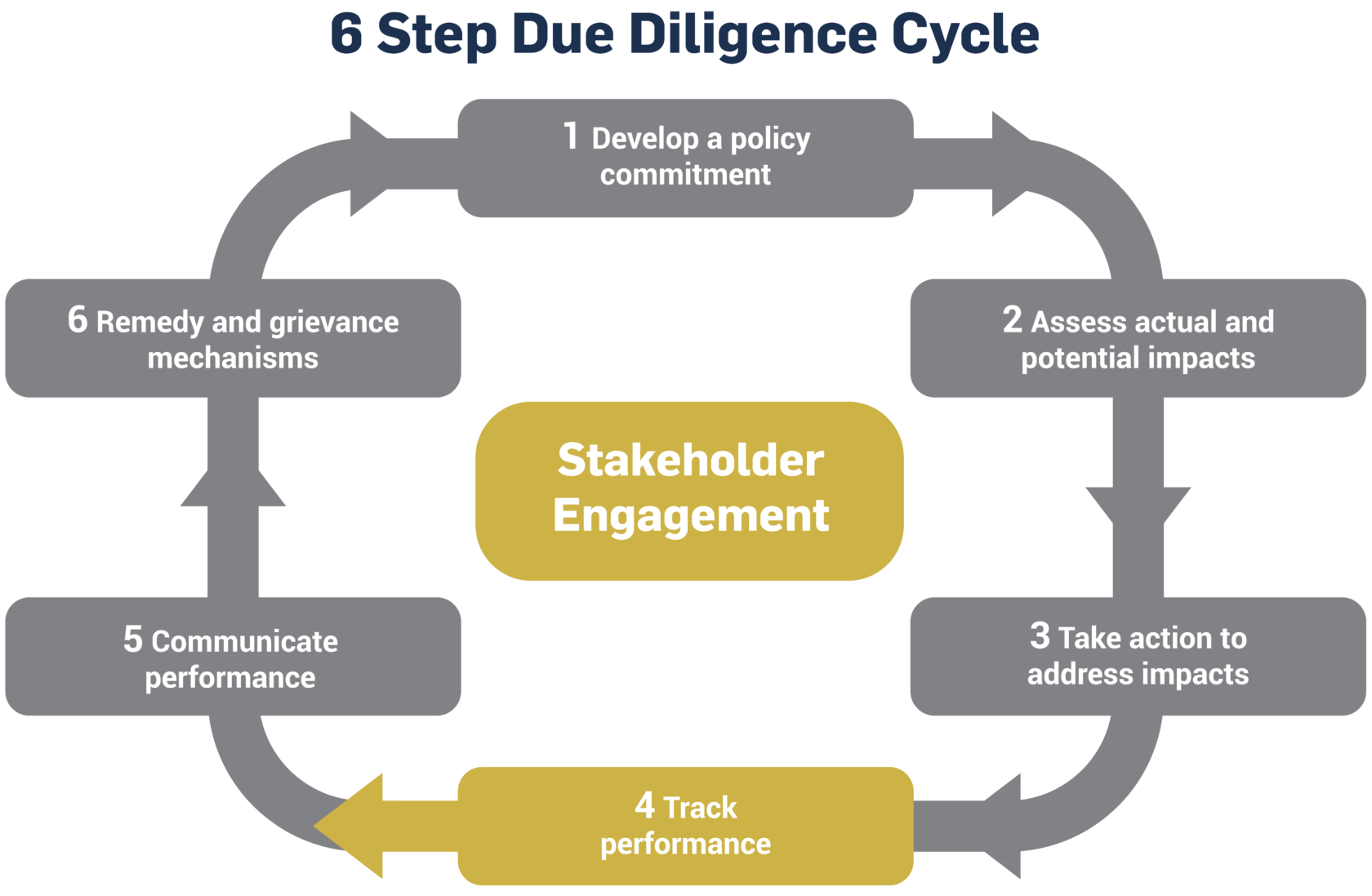
Companies should regularly monitor the effectiveness of their efforts to prevent, mitigate and address human rights risks in conflict-affected and high-risk areas (CAHRAs). Given the dynamic nature of conflict settings, monitoring should be an ongoing process that enables companies to identify emerging risks, assess the effectiveness of mitigation measures and adapt their approach as circumstances evolve. Businesses should also be prepared to track and communicate how human rights considerations inform decision-making during periods of crisis.
In line with guidance by the UNDP and ICC on heightened human rights due diligence (hHRDD), companies should monitor not only human rights impacts but also how their activities, business relationships and mitigation measures may influence conflict dynamics. Monitoring should draw on both quantitative and qualitative information, including stakeholder feedback, grievance mechanisms, incident reporting, conflict analysis and human rights indicators.
Ongoing monitoring should inform decisions on whether to continue, adapt, suspend or responsibly disengage from operations or business relationships where severe risks cannot be prevented or adequately mitigated. Such decisions should be based on an assessment of the likely impacts on affected stakeholders, recognising that both remaining and disengaging may create or exacerbate harm.
Helpful Resources
- Geneva Centre for Security Sector Governance (DCAF) & International Committee of the Red Cross (ICRC), Addressing Security and Human Rights Challenges in Complex Environments Toolkit, (latest edition): A practical toolkit for companies operating in conflict-affected and other high-risk environments.
- United Nations Development Programme (UNDP) & UN Working Group on Business and Human Rights, Heightened Human Rights Due Diligence for Business in Conflict-Affected Contexts: A Guide, (2022): The leading practical guidance on implementing heightened human rights due diligence (hHRDD) in conflict-affected settings.
5. Communicate Performance
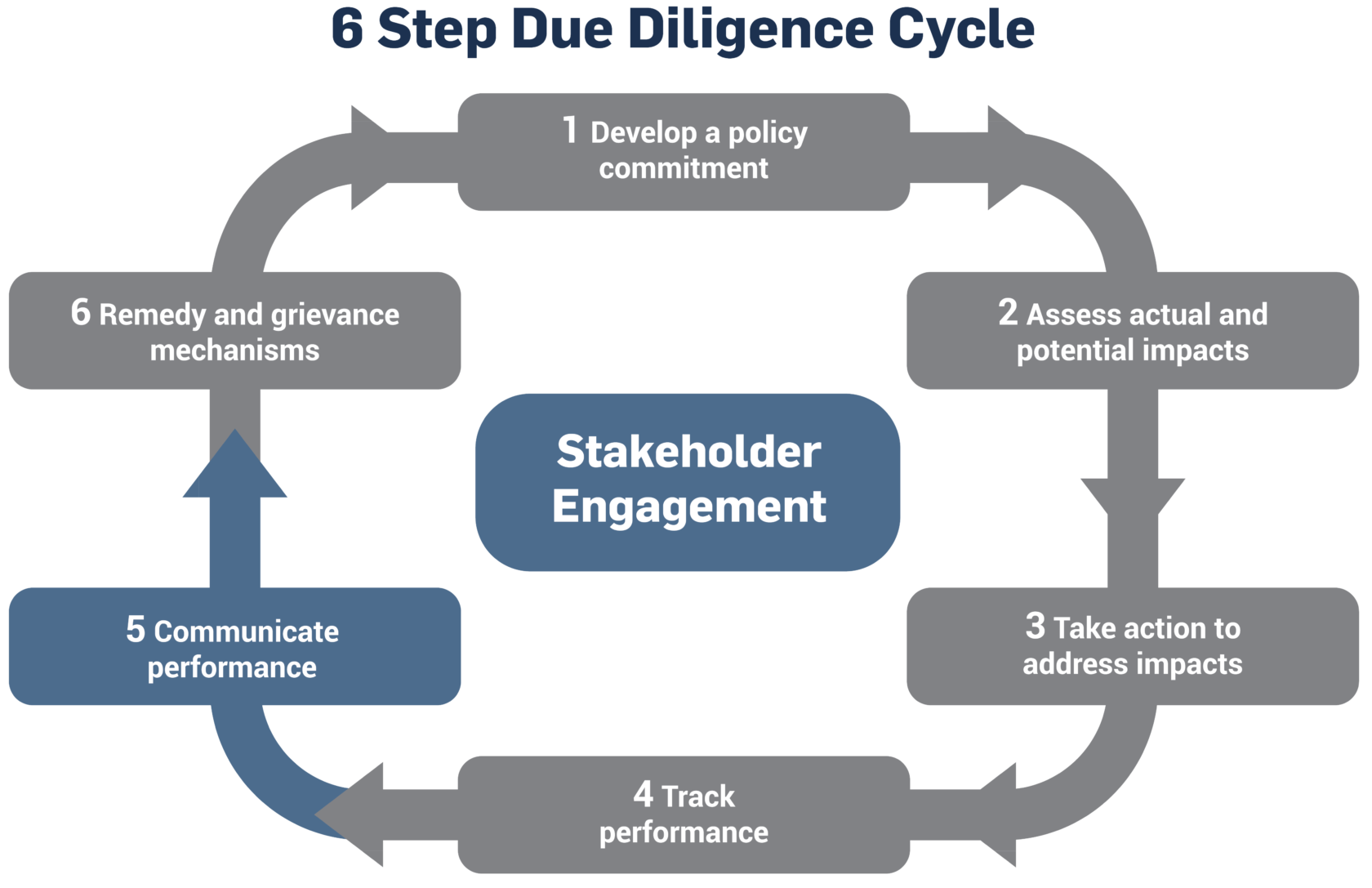
Companies should communicate how they identify, assess and address human rights risks in conflict-affected and high-risk areas (CAHRAs). In line with the UNGPs and OECD Guidance, communication should be proportionate to the severity of risks and tailored to the needs of affected stakeholders. Timely reporting to all stakeholders can help build trust, demonstrate accountability and provide evidence that heightened human rights due diligence (hHRDD) is being implemented effectively.
However, businesses should carefully consider potential security, legal and operational risks associated with disclosure. In conflict-affected settings, excessive transparency may place workers, communities, human rights defenders or other stakeholders at risk. Businesses should therefore balance transparency with the principle of avoiding harm.
Companies should communicate not only the risks identified and actions taken, but also significant business decisions that may affect rights-holders, including decisions to remain, suspend, relocate or exit operations. Where appropriate, communication should explain how stakeholder views, conflict dynamics and human rights considerations and the exercise of leverage influenced these decisions and how the company intends to monitor their effectiveness over time.
Helpful Resources
- BSR, Business in Conflict-Affected and High-Risk Contexts, (2021): This report provides guidance on what companies should do differently to identify and address their impacts on human rights in conflict-affected and high-risk areas (heightened human rights due diligence).
- Office of the United Nations High Commissioner for Human Rights (OHCHR), Business and Human Rights in Challenging Contexts: Considerations for Remaining and Exiting, (2023): Guidance on applying the UNGPs in situations involving conflict, political instability and severe human rights risks, with particular focus on responsible remain/exit decisions, leverage and access to remedy.
- United Nations Development Programme (UNDP) & UN Working Group on Business and Human Rights, Heightened Human Rights Due Diligence for Business in Conflict-Affected Contexts: A Guide, (2022): The leading practical guidance on implementing heightened human rights due diligence (hHRDD) in conflict-affected settings.
6. Remedy and Grievance Mechanisms
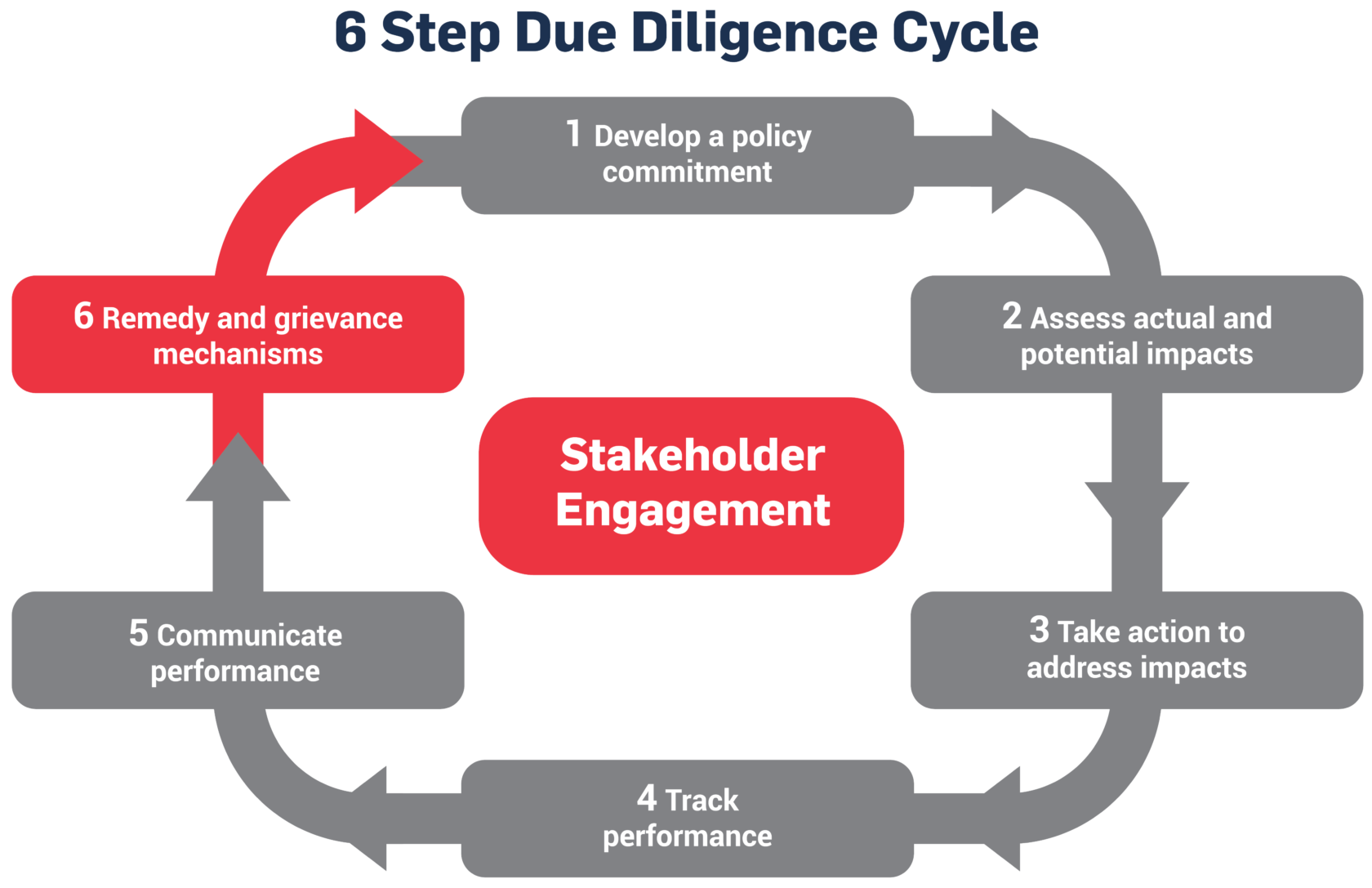
Businesses operating in or sourcing from conflict-affected and high-risk areas (CAHRAs) should ensure that workers, communities and other affected stakeholders have access to effective grievance mechanisms and remedy. Conflict and weak governance can reduce access to courts, government institutions and other formal channels for redress, making company-level grievance mechanisms particularly important. In line with the UNGPs and OHCHR guidance, companies should ensure grievance mechanisms are accessible, predictable, equitable and safe to use.
In conflict-affected contexts, the principles of equitable and safe use are even more salient. Companies must remain vigilant to exacerbating tensions, including through the use of grievance channels. Attention should be paid to protecting complainants from retaliation or other consequences associated with raising concerns. Processes should be designed to be neutral, to account for heightened vulnerabilities and barriers to participation that often occur in conflict-affected settings. Policies and processes should also be informed by ongoing engagement with affected stakeholders or credible representatives where direct engagement is not possible.
Where businesses identify that they have caused or contributed to adverse impacts, they should provide for or cooperate in remediation. Where there is a risk of contributing to serious violations, companies may consider suspending commercial relationships, not just leverage.
Where they are directly linked to adverse impacts through business relationships, they should exercising leverage to prevent or mitigate harm and support access to remedy where appropriate.
Companies should also consider how remedy can be made available when operations are suspended, transferred or exited – particularly where affected stakeholders may continue to experience harm after the business has left the area or where disengagement could itself result in adverse human rights consequences.
Some actions companies can take include:
- Establishing trusted and accessible grievance mechanisms for workers, communities and other affected stakeholders.
- Vulnerable groups should be provided for explicitly, such as confidentiality for victims of sexual and gender based violence, or specific provisions for displaced people and Indigenous communities.
- Taking steps to prevent retaliation against individuals raising concerns, including human rights defenders, journalists, trade union representatives and community leaders.
- Adapting grievance mechanisms to account for conflict-related barriers such as insecurity, displacement, language differences and limited access to technology.
- Ensuring grievance mechanisms explicitly cover allegations against public and private security provides, including for excessive use of force, sexual violence and harassment, with reference to the Voluntary Principles on Security and Human Rights and the International Code of Conduct for Private Security Service Providers (ICoCA).
- Ensuring complaints are investigated promptly and that affected stakeholders are informed about outcomes and next steps.
- Providing for or cooperating in remediation where the company has caused or contributed to harm.
- Considering remedy obligations when suspending, transferring or exiting operations and monitoring commitments made to affected stakeholders after disengagement where feasible.
- Ensure that company mechanisms do not impede access to judicial remedy, particularly for serious abuses and potential criminal conduct.
The appropriate response will be highly context-specific, particularly when a company is linked to impacts through a business relationship, and should be based on a sufficient contextual analysis of the severity of the impact, the company’s leverage and the likely human rights consequences of different courses of action.
Remedy doesn’t end at exit
A company’s responsibility to consider remedy does not necessarily end when it leaves a conflict-affected setting. The OHCHR’s guidance on responsible remaining and exiting highlights the importance of assessing whether affected stakeholders may continue to experience adverse impacts following disengagement and whether commitments relating to remediation, compensation or other support measures need to continue after exit.
Helpful Resources
- Geneva Centre for Security Sector Governance (DCAF) & International Committee of the Red Cross (ICRC), Addressing Security and Human Rights Challenges in Complex Environments Toolkit, (latest edition): A practical toolkit for companies operating in conflict-affected and other high-risk environments.
- Office of the United Nations High Commissioner for Human Rights (OHCHR), Women’s human rights and gender-related concerns in situations of conflict and instability, (latest edition): OHCHR portal providing information on how conflict and instability exacerbate existing discrimination and human rights risks for women and girls, and links to additional reports and videos on gender-related issues in conflict-affected settings.
Case Studies
Coming soon…
Further Guidance
- BSR, Business in Conflict-Affected and High-Risk Contexts, (2021): This report provides guidance on what companies should do differently to identify and address their impacts on human rights in conflict-affected and high-risk areas (heightened human rights due diligence).
- Business and Human Rights Compliance, Guidance: Conducting Business During Armed Conflict, (2023): This guidance aims to provide an overview of international humanitarian law, delineate the obligations placed on businesses and outline how companies can engage in activities responsibly while ensuring compliance with IHL.
- European Commission, Due Diligence Ready! Ensuring responsible minerals and metals supply chains: This guidance provides an overview of the OECD CAHRA guidance and the EU ‘Conflict Minerals’ Regulation.
- Geneva Centre for Security Sector Governance (DCAF) & International Committee of the Red Cross (ICRC), Addressing Security and Human Rights Challenges in Complex Environments Toolkit, (latest edition): A practical toolkit for companies operating in conflict-affected and other high-risk environments.
- International Chamber of Commerce (ICC), Guidance on Responsible Business in Challenging Contexts, (2024): This practical guidance helps companies operate responsibly in conflict-affected contexts by managing risks, respecting human rights and aligning stakeholder expectations to support effective responses to crises.
- International Committee of the Red Cross (ICRC), Business and IHL: An introduction to the rights and obligations of business enterprises under international humanitarian law, (2020): This publication aims to provide managers of business enterprises with a base understanding of situations where business operations may either benefit from the protections afforded by international humanitarian law or be constrained by its rules.
- International Committee of the Red Cross (ICRC), What private businesses need to know about international humanitarian law, (2024): This blog post explains why businesses should be aware of relevant rules of international humanitarian law (IHL), which rules are most relevant and what legal risks private businesses face if they do not respect IHL.
- Internal Displacement Monitoring Centre, 2026 Global Report on Internal Displacement: IDMC’s Global Report on Internal Displacement (GRID) is the authoritative source for data and analysis on the state of internal displacement for the previous year.
- International Labour Organization (ILO), Resilience in conflict situations: A toolkit for employer and business membership organizations and enterprises, (2025): This toolkit offers a set of resources for enterprises to build resilience to risks posed by conflict or the threat of conflict.
- Journal of Human Rights Practice, Heightened Human Rights Due Diligence in Practice: Prohibiting or Facilitating Investment in Conflict Affected Areas?, (2023): This academic article explains what hHRDD means in practice and examines how hHRDD expands the business responsibility from identifying and mitigating the impact of its own operations on human rights to the impact on the conflict itself.
- London Metal Exchange (LME), LME Policy on Responsible Sourcing of LME-Listed Brands, (latest edition): The LME’s responsible sourcing requirements draw heavily on the OECD Due Diligence Guidance for Responsible Supply Chains of Minerals from Conflict-Affected and High-Risk Areas and require producers of LME-listed metals to identify, assess and address risks relating to conflict financing, human rights abuses and responsible mineral sourcing.
- Lysverket, A Corporate Crime Base (red flags of business liability in conflict-affected and high-risk areas): Practical risk-screening tool that helps businesses identify legal, compliance and human rights risks when operating in conflict-affected and high-risk environments, supporting enhanced due diligence and conflict-sensitive decision-making.
- MAR, The Minorities at Risk Project: This university-based research project monitors and analyzes the status and conflicts of politically active communal groups in countries with a population of at least 500,000.
- Norges Bank Investment Management (NBIM), Human Rights Expectations of Companies, (2025): NBIM’s expectations highlight the importance of risk-based human rights due diligence, including in conflict-affected and high-risk contexts.
- Organisation for Economic Co-operation and Development (OECD), OECD Due Diligence Guidance for Responsible Supply Chains of Minerals from Conflict-Affected and High-Risk Areas: Third Edition, (2016): The foundational multi-stakeholder initiative on responsible supply chain management of minerals from CAHRAs, this guidance helps companies respect human rights and avoid contributing to conflict through their mineral sourcing practices.
- Office of the United Nations High Commissioner for Human Rights (OHCHR), Business and Human Rights in Challenging Contexts: Considerations for Remaining and Exiting, (2023): This guidance advises businesses on what considerations they should evaluate when deciding on whether to remain or exit in a challenging context or CAHRA.
- Office of the United Nations High Commissioner for Human Rights (OHCHR), Women’s human rights and gender-related concerns in situations of conflict and instability: OHCHR portal providing information on how conflict and instability exacerbate existing discrimination and human rights risks for women and girls, and links to additional reports and videos on gender-related issues in conflict-affected settings.
- Responsible Minerals Initiative (RMI), Conflict Affected and High-Risk Areas (CAHRAs), (2021): Guidance for companies on identifying conflict-affected and high-risk areas (CAHRAs), outlining key concepts, risk indicators and information sources to support responsible minerals due diligence and alignment with OECD expectations.
- Responsible Minerals Initiative (RMI), Responsible Minerals Assurance Process: Examples of Procedures to Identify Conflict-Affected and High-Risk Areas, (2021): Practical resource that provides examples of approaches, criteria and information sources companies can use to identify CAHRAs and strengthen risk-based due diligence across mineral supply chains.
- TrustWorks Global, Responsible Business in Conflict-Affected Areas Brief Series, (2024): A series of practical briefs that help companies understand and manage heightened risks in conflict-affected and high-risk areas, covering topics such as the EU Corporate Sustainability Due Diligence Directive (CSDDD) (Brief 1), heightened human rights due diligence (hHRDD) assessments (Brief 3), and the intersection of international humanitarian law and business responsibility (Brief 4).
- United Nations Development Programme (UNDP), Heightened Human Rights Due Diligence for Business in Conflict-Affected Contexts: This guide provides parameters for businesses to design and implement effective due diligence measures in contexts affected by armed conflicts and violence.
- UN Global Compact (UNGC) Switzerland & Liechtenstein Country Network, Responsible Business in Conflict-Affected or High-Risk Areas, (2023): This webinar provides an overview of what companies need to know about conducting hHRDD and operating in a conflict-sensitive manner.
- UN Global Compact (UNGC), 15 Actions for Businesses Operating in Conflict Zones, (2024): This UNGC web page provides 15 actions for companies operating in a conflict zone to consider.
- UN Global Compact (UNGC), Guidance on Responsible Business in Conflict-Affected & High-Risk Areas: A Resource for Companies and Investors, (2010): This guidance aims to help companies in implementing responsible business practices in CAHRAs consistent with the Global Compact Ten Principles.
- UN Global Compact (UNGC), Introduction: Heightened Human Rights Due Diligence, (2024): This UNGC Academy Webinar was developed and delivered together with the Geneva Centre for Security Sector Governance (DCAF) and provides an overview of conducting hHRDD in CAHRAs.
- UN Global Compact (UNGC), Navigating Crises in a Complex World: Lessons for Business Leadership, (2023): This UNGC Webinar provides guidance on how business leaders can leverage their role for peacebuilding and corporate responsibility.
- UN Working Group on Business and Human Rights (BHR), Business, Human Rights and Conflict Affected Regions: Towards Heightened Action, (2020): In this report, the UN Working Group on BHR clarifies the practical steps and measures that States and businesses should take to prevent and address business-related human rights abuse in conflict and post-conflict contexts, focused on hHRDD and access to remedy.
- UN Working Group on Business and Human Rights (BHR) Report, Implementing the third pillar: lessons from transitional justice guidance by the Working Group: report of the Working Group on the Issue of Human Rights and Transnational Corporations and other Business Enterprises, (2022): Guidance on applying the UNGPs’ access to remedy pillar in post-conflict and transitional justice settings, including recommendations on effective remedies, reparations and accountability for business-related human rights harms.
- UN Working Group on Business and Human Rights (BHR) Report, Report on business, human right and conflict-affected regions: towards heightened action, (2020): Guidance on heightened human rights due diligence and responsible business conduct in conflict-affected and post-conflict contexts, with recommendations for states and businesses on preventing and addressing severe human rights risks.